



Sumba is perhaps one of the last truly wild, untamed, and magnificent places that you can still visit and feel as though you are entering through a portal into another world. A place where the jungle cascades toward the ocean, uncontrolled, bountiful, and lush. Where waves crash onto the shores as local fishermen with their spearguns undulate with the tides in and out of the water, their nets emptying and filling as they catch fish. A place where, still in 2025, only three local women have learned how to surf. However, these women carry with them a strong desire to change this – and start their very own female surf school right here on the dramatic shores of Sumba.
Locals take immense pride in Sumba’s distinctive fusion of religion and traditions, which are deeply anchored in animism. These beliefs shape every aspect of life on the island, from how children are raised, to job choices, daily customs, and sacred rituals. Marapu, the local spiritual tradition, has been practiced for thousands of years, predating other major world religions like Hinduism, Islam, and Christianity. Marapu traditions are rooted in a profound bond between the people, their ancestors and the natural world, expressed through ancient rituals and a deep respect for the environment.
It’s no wonder that reverence for the natural world is so strong in Sumba, where the jungle, beaches, and cliffsides collide to emerge in a breathtaking display of raw and untamed beauty. It was here, at this meeting point between the jungle and ocean, that I first met Lisa, Rani, and Milan. We connected through a mutual friend who had worked previously with these women on conservation projects in the area.
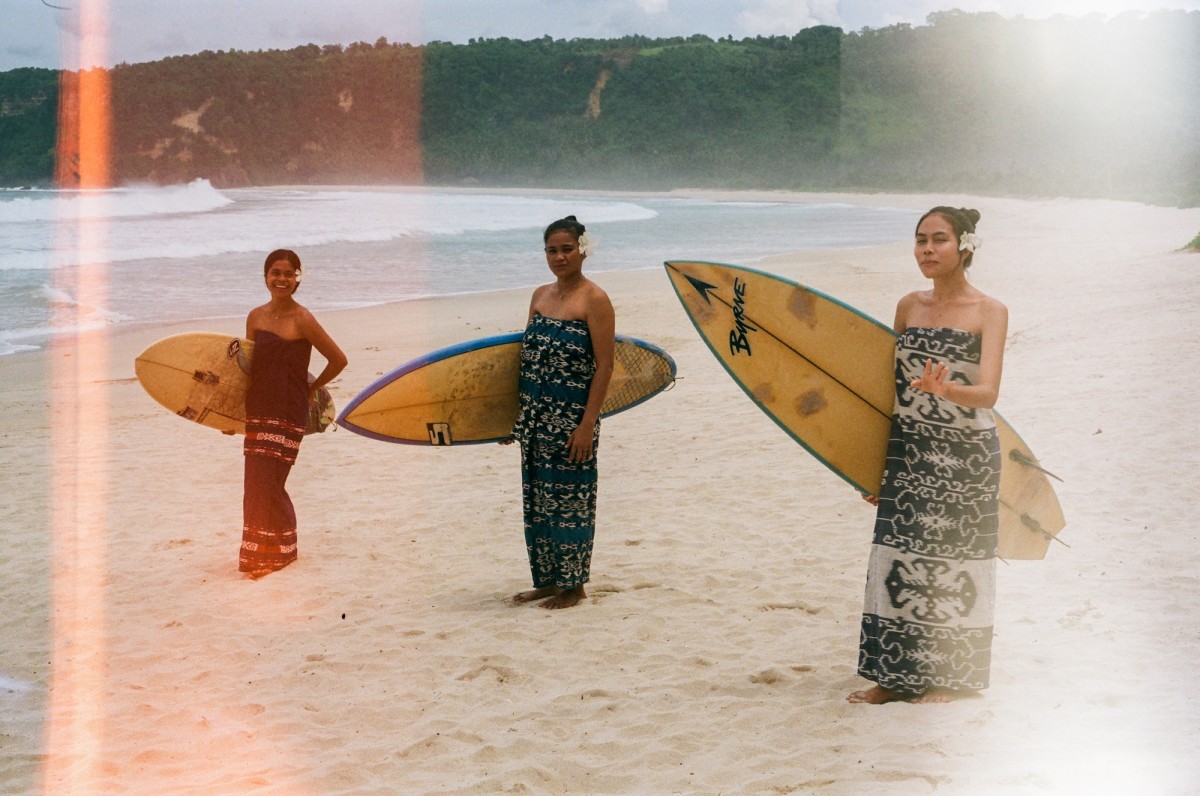
Before I arrived in Sumba, we had all exchanged a few messages through WhatsApp. The girls shared with me that while they had only just started to surf, they absolutely loved it and wanted to speak with me about their experience as the first South Sumbanese women to ever try to learn surfing. I was eager to meet them and even more surprised when I found out they worked at the very hotel I just happened to be staying at. I’ve gotten used to these serendipitous divine interventions while reporting, as it seems the universe is constantly scheming to connect me with more and more women to amplify their voices and stories.
As soon as I arrived at the Sanubari – an amazing beachside resort based in Sumba where I would spend my next week, I knew I was somewhere special. We made plans to meet the next day to discuss their surfing experiences, take some photographs, and get in the water. The next morning, as water buffalo emerged from their ponds, the islands’ native horses brayed in their stables, and local fishermen set out in search of their morning catch, we gathered on the beach in front of the Sanubari to explore these women’s deep cultural connections to the ocean.
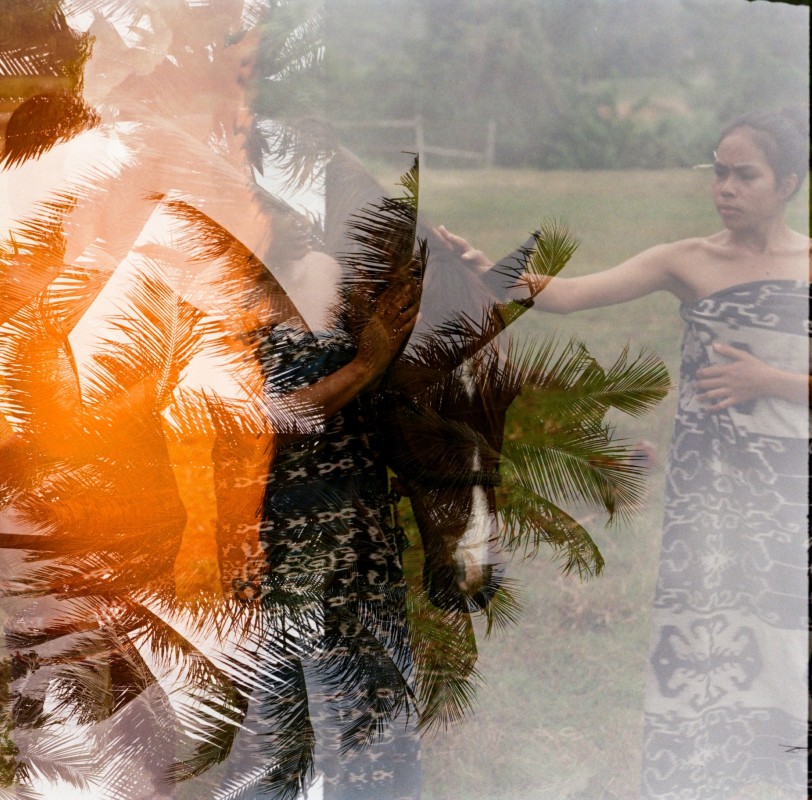
To begin, Lisa and Milan wanted to tell me the story of the yearly Nyale and Pasola traditions, which continue today to tie both men and women deeply to the ocean. Each year, for three days, sea worms – known as “Nyale” – arrive at the Sumba shores. Their arrival signals a cascade of events and traditions where both men and women flock to the water to catch the Nyale in traditional nets.
The legend behind the Nyale speaks of a queen who was married to a fisherman. Her fisherman husband went out to sea, and after a long time with no return, the queen assumed he had died and later found a new husband. However, after she found a new husband, she was shocked to learn her fisherman husband wasn’t dead after all and returned, angry with the new situation. The two men fought—a moment now re-enacted in the “Pasola” tradition, a horseback battle that often turns so violent that many participants are left with serious injuries. However, Milan tells me – that’s just the way it is; it’s tradition. According to legend, the queen was so upset with the fighting that she threw herself into the ocean out of despair, and was reincarnated as a Nyale worm. Today, locals fish and eat the worms during the three days they arrive at Sumba’s shores for good luck.
Lisa laughs as we speak about the story of the Nyale – as she herself feels a strong connection to the queen. She says, “I don’t care. Many people told me I shouldn’t go in the ocean, that it’s dangerous and not my place as a woman, but I just threw myself in there anyway, just like the queen.”
Rani explains, “There are a few men here who support us, maybe two or three who keep encouraging us to learn and help by teaching us technique, but a lot of men just don’t understand why we want to surf as well, and they just ignore us.” Even their own families don’t understand their desire to learn to surf. “My grandma is so scared for me every time I jump in the ocean, she fears for my life, but I have a deep respect for the ocean,” explains Lisa. “I know its power, and I respect its power. I once went with some local surf boys out to a surf spot where these huge waves kept coming – they were bigger than anything I’d ever seen. I was so scared and lost my board, and one of the local boys had to save me, but after I made it back to the boat, I realized – okay, that’s the worst that could happen, and I wanted to go back into the water.”
“There are a few men here who support us, maybe two or three who keep encouraging us to learn and help by teaching us technique, but a lot of men just don’t understand why we want to surf as well, and they just ignore us.”
“My husband supports me learning how to surf,” Rani adds. “I think many men here would eventually support us now if we keep trying and teaching others.” Milan adds, “connection with nature and the ocean is our Marapu tradition; it is incredibly important to us.” For these women, surfing is another way to honor their heritage and connect with the spirit of nature and the ocean, something deeply rooted in their identity as Sumbanese women.
Despite being the first three women to ever try surfing, Rani, Milan, and Lisa are eager to share their love and knowledge of the ocean with the next generation. “Teaching the next generation of girls how to swim and surf is my dream,” they told me. “Girls are still expected to stay at home, especially once they’re married and have children, but I want to show them they can do something different.”
All three of the girls have previously worked with Konservasi Indonesia (KI), Conservation International’s (CI) Surf Conservation Program, and local partner organizations like Yayasan Satu Visi (YSV). They collaborated with these groups on community-driven initiatives, including the inaugural Surf Conservation Camp, which focused on preserving Sumba’s pristine waves and natural environment for future generations.
Inspired by this experience, these girls want to continue this vision themselves – to inspire other female surfers to join them in their journey of learning to swim and surf. We discussed the potential of a collaboration with Conservation International and the possibility of expanding the nonprofit program, OceanFolx—which teaches local women to swim and surf in Lombok—to Sumba, with these three women leading the way.
Related: Empowering the Women of Lombok With the Gift of Surfing
The pride and spirit these women feel for their local culture is palpable. At their request, we took a few photos of them dressed in their traditional ikat cloth. Their traditional clothing is not reserved for ceremonies alone; it is also worn in everyday life. “Ikat is very important to us because it’s what we have been wearing forever. It is a symbol of our culture and our Sumbanese lifestyle,” they say.
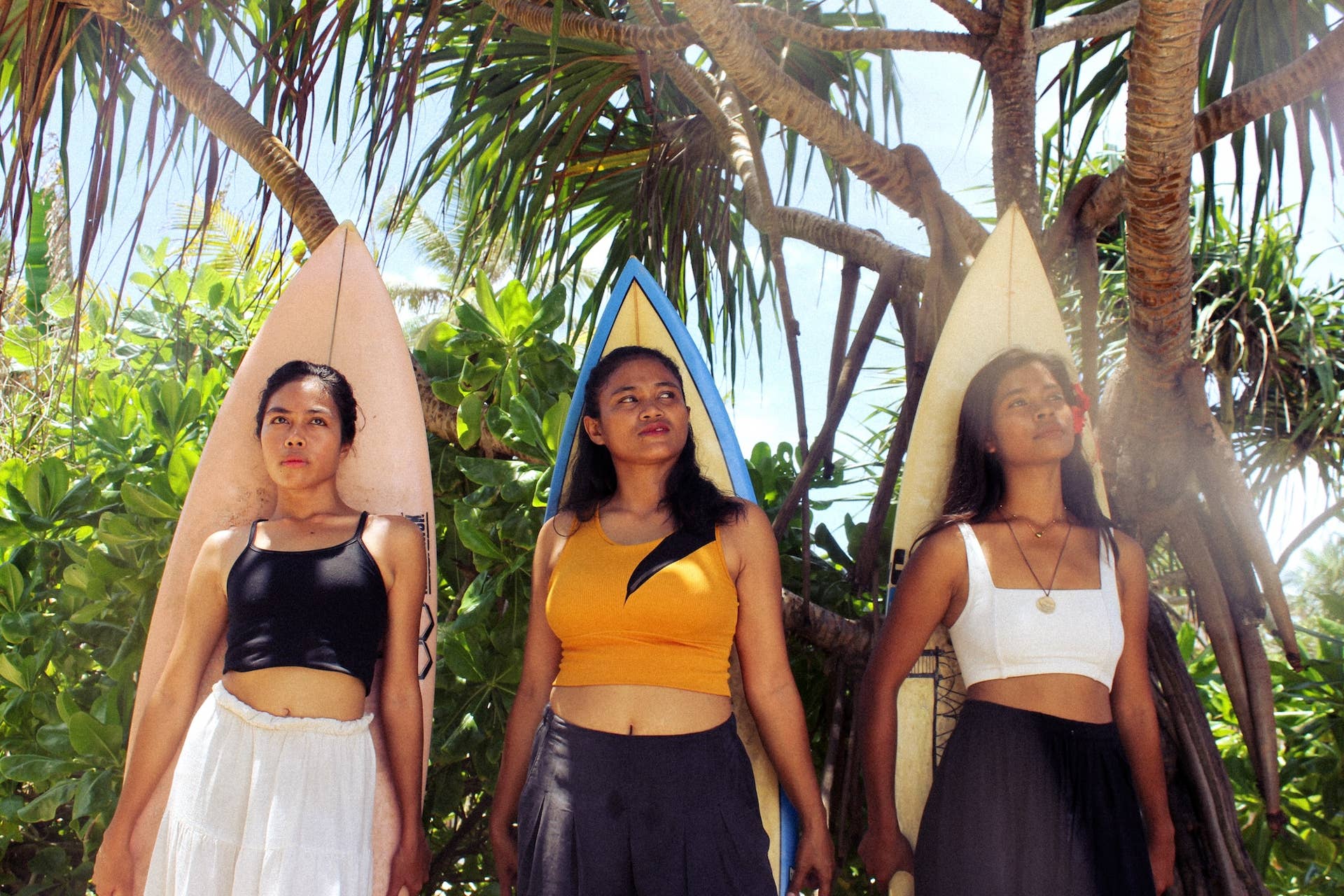
While sharing these women’s stories is incredibly important to me, I am also reminded of the importance of traveling with respect and mindfulness for local cultures—ensuring that when we visit, we learn and deeply engage with the traditions and customs of the places we step foot in.
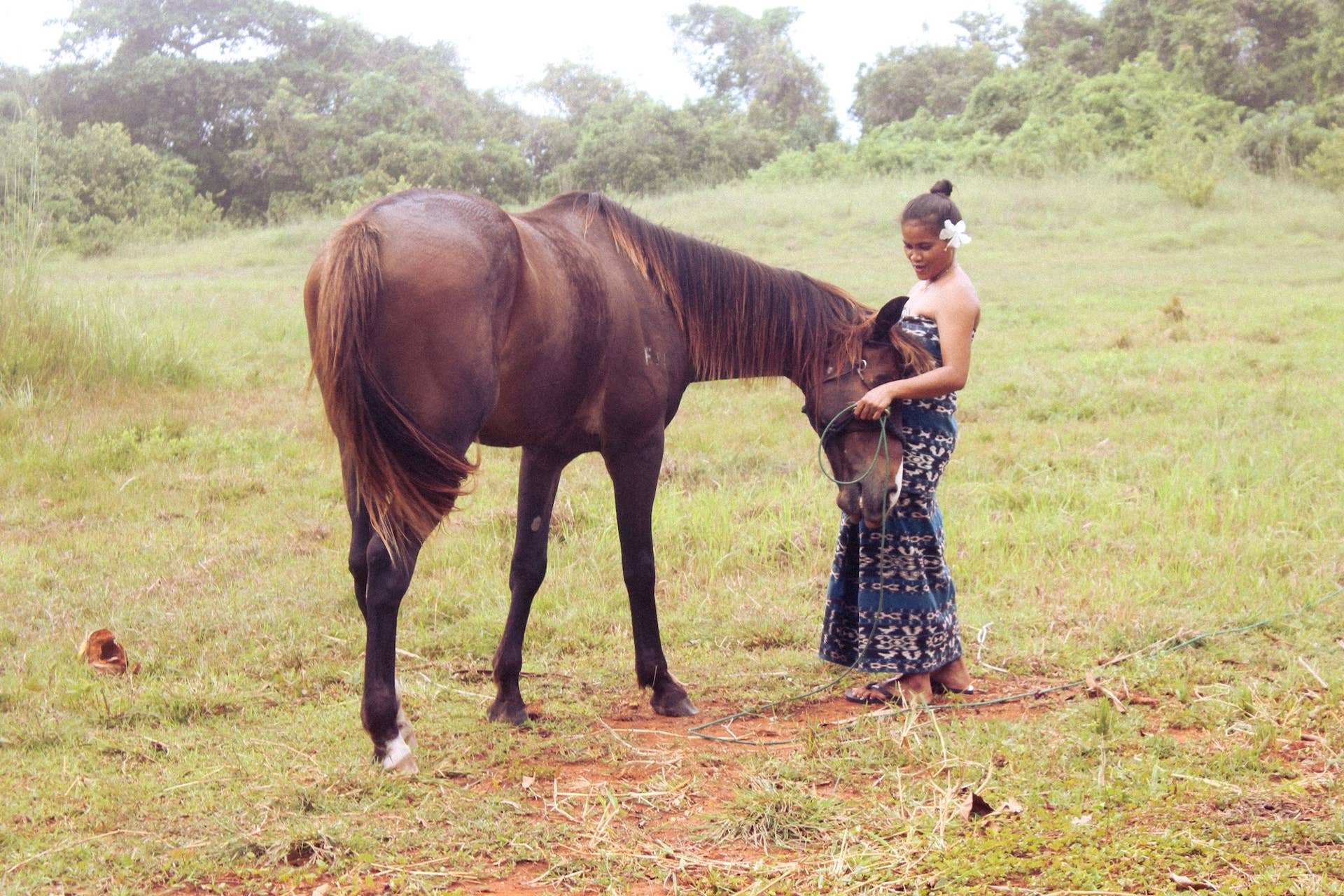
As we leave the beach and head towards the horse stables, Rani explains that animals are also interwoven into important Marapu traditions such as weddings and funerals, and the Sumbanese people are incredibly proud of their native Sandalwood horse. During traditional funerals, it is customary to sacrifice one of these horses. “This tradition has been happening since our ancestors,” Rani explains. “The soul of the horse is thought to transport the soul of the human to the next stage.”
As we watch the horses at the nearby stable, Rani finishes our conversation with conviction, “It’s not common for women to do ‘man’ things here—swimming, fishing, surfing, and horseback riding are all considered ‘man’ activities. But I don’t care. I’m still a mom, and I respect that, but no one can say women cannot do what men do. I can still do what men do. If you love it, just do it. I fought with my mom before because I wanted to surf and ride horses. She told me not to do it. She said, ‘It’s not for you,’ and I said, ‘No mom, I like to do it, so it’s for me.’”
After a few days of getting to know each other through beach walks, scooter rides, snorkel adventures, and surf sessions, the time comes for us to part ways. With heavy hearts, we promise to reunite, and I tell them I can’t wait to return and help them create their very own female surf school one day.
As I finally journey back to Lombok, I leave feeling deeply inspired by this “forgotten” island. So few Indonesians and tourists know about Sumba, which perhaps is what makes it so special. I can’t help but notice a similar rebellious spirit in these women that I felt when speaking with the Sumbawanese women who despite their families warnings, taught themselves how to swim. It brings a smile to my face to think that, across Indonesia — and perhaps the world — women who were once forbidden from crossing the boundary between land and sea are now breaking through, hand in hand, and diving into the ocean together just like the Nyale queen – whose spirit and story still resonates all of these years later.
Related: Sumbawa’s Ocean Rebels: Women Defying Tradition to Swim and Surf