



The Pacific Ocean is home to some of the deepest points on the planet. In fact, four of the top six deepest spots in the world can be found in the Pacific.
The Pacific’s basin is uniquely low, which is one of the reasons this ocean produces some of the world’s greatest surf zones. This is because deeper water allows waves to travel faster, and with longer wavelengths, or distance between waves.
The same forces that produce some of the world’s greatest surf zones, however, can also produce extremely destructive phenomena. Tsunamis can travel largely interrupted across the Pacific with little landmass to get in their way. The same is true for swells; a big, southern-angled swell from Tahiti will eventually land in Hawaii, some 2,800 miles away.
At its deepest point, the Pacific Ocean can comfortably fit about 13 Burj Khalifas stacked, one on top of the other—a depth that only a handful of people across history have seen. But what are the other unfathomably deep points of our oceans? Here’s a list.
Molloy Deep, Arctic Ocean (18,210 Feet)
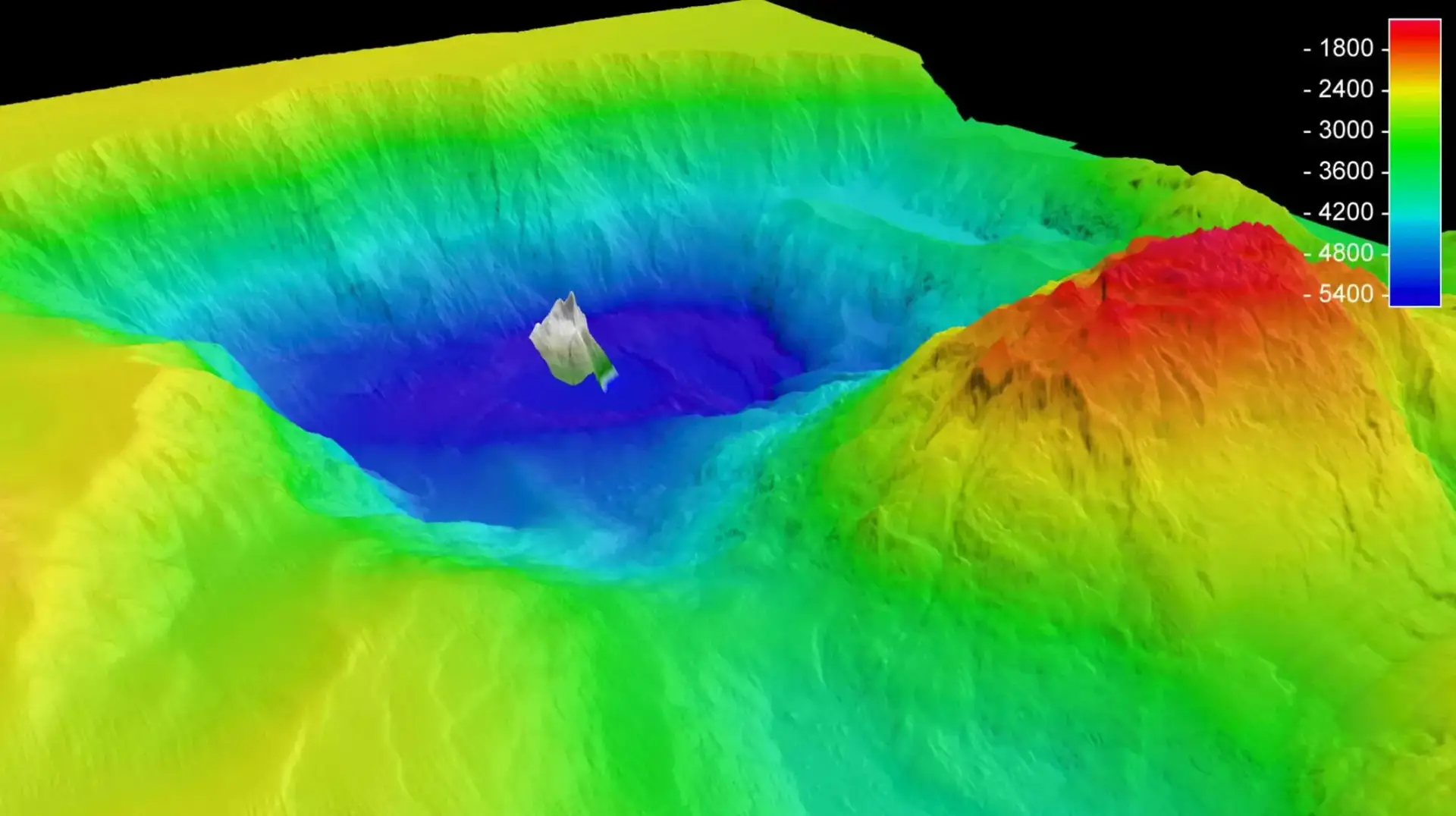
In September 1972, a research vessel called the USNS Hayes discovered the deepest part of the Arctic Ocean and named it after Arthur E. Molloy, the research scientist who first observed this deep, underwater chasm. The Molloy Deep is located in the Fram Strait, between Greenland and Svalbard, about 100 miles to the west of the Svalbard archipelago.
According to geologists, the Molloy Deep has existed for more than 30 million years. It is located where the Mid-Atlantic Ocean ridge system takes a sharp plunge. A few years ago, while trying to visualize the hole’s extreme depths, Norwegian researchers created a visual of what it would look like if the country’s national mountain, Stetind in Nordland (height 4,567 feet), were dropped inside the hole. Only the very tip would be left peeking up.
Milwaukee Deep, Puerto Rico Trench, Atlantic (27,480 Feet)
The deepest part of the Atlantic Ocean is the Milwaukee Deep, which is located about 76 miles north of Puerto Rico. The trench was first discovered in 1939 by the USS Milwaukee, an Omaha-class light cruiser primarily used for patrolling the Atlantic and Pacific. The crew on board used echo sounding to estimate the depth of the trench, which was then named after the vessel.
Despite its discovery more than 85 years ago, the first expedition to the trench’s bottom didn’t happen until 2018. American undersea explorer Victor Vescovo made a crewed descent as part of the Five Deeps Expedition, a yearlong endeavor to reach the bottom of each of the world’s five oceans. A French submersible called Archimede had explored the Puerto Rico Trench in 1964, managing to dive to 27,200 feet—narrowly missing the trench’s maximum depth.
Kuril-Kamchatka Trench, Northwest Pacific (31,590 Feet)
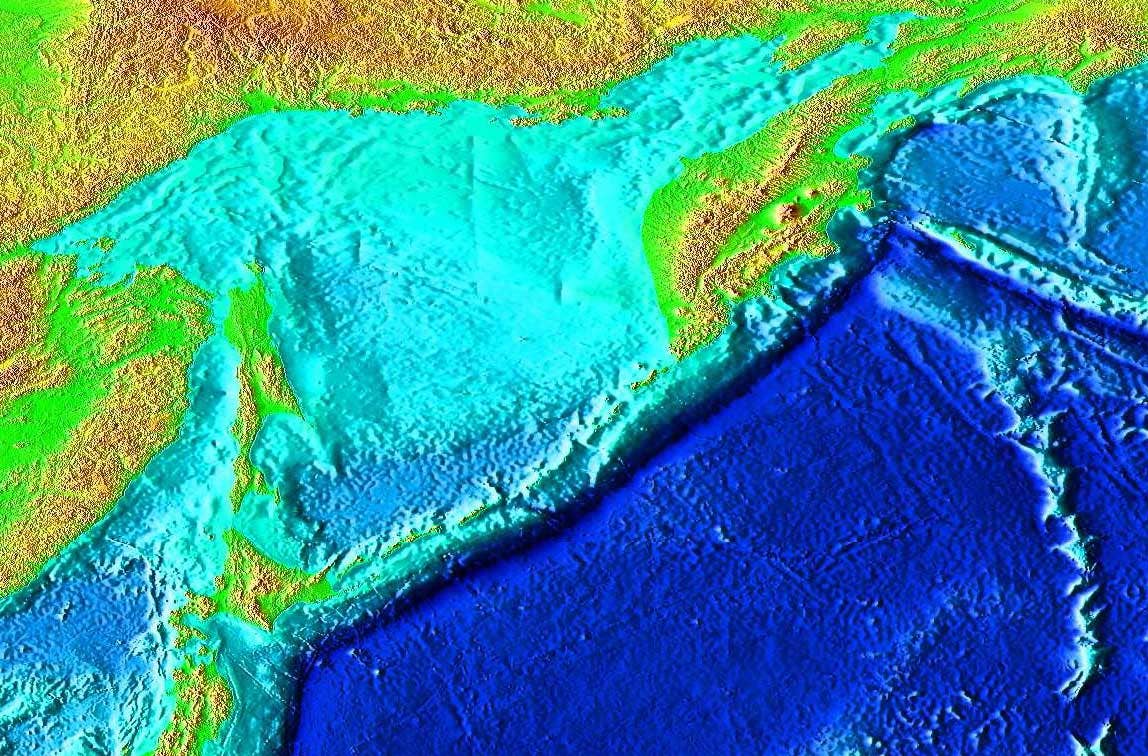
The Kuril-Kamchatka Trench stretches from Hokkaido in Japan to the Kamchatka Peninsula in Russia, a distance spanning more than 1,300 miles. This is one of the deepest trenches in the world, situated where the Pacific tectonic plate slides beneath the Okhotsk plate.
The trench was initially discovered in the 1870s as part of the Challenger expedition, a scientific program that made dozens of discoveries and laid the foundations for modern oceanography. This expedition was also responsible for discovering almost 5,000 new species of marine life.
Initially, the depth of the Kuril-Kamchatka Trench was estimated to be 27,952 feet. Decades later, in 1953, a German-built research vessel serving the Soviet Union called the Vityaz used acoustic monitoring equipment to locate a deeper part of the trench. In 1954, the current name of the trench was formally proposed and adopted.
Emden Deep, Philippine Trench, Southwest Pacific (34,580 Feet)
The Emdem Deep is located along the 820-mile-long Philippine Trench, which extends from the central island of Luzon in the Philippines to Halmahera in Indonesia. At its widest point, the trench is about 18 miles across.
The Emdem Deep was first discovered in 1927 by the German ship Emdem. In 1951, the Danish ship Galathea explored the area further, documenting the marine life it found there. The deepest point is also referred to as the Galathea Deep, in honor of the work conducted by the Danish crew, and the two names are used interchangeably.
It wasn’t until 2021, in a post-COVID world, that a manned crew dived into the Emdem Deep. Again, it was Victor Vescovo, along with Philippine scientist Dr. Deo Florence Onda, who made the first crewed submersible mission to the deep’s floor. The descent took four hours and covered more than a mile of the seabed, but it turned out that there wasn’t much to see; the two-man crew reported excellent visibility but little marine life. The ascent took another three and a half hours.

Horizon Deep, Tonga Trench, Southwest Pacific (35,509 Feet)
It was only in 2019 that Horizon Deep was officially recognized as the second-deepest point on the planet, which speaks volumes about how little we understand about our big blue. Our deep-dive hero, Victor Vescovo, became the first human to make a solo mission to the bottom of the deepest point of Tonga’s Trench—all as part of the Five Deeps Expedition.
Horizon Deep was first recorded in 1952 and was named after the research vessel that discovered it, the RV Horizon, from the Scripps Institution of Oceanography. As for what was discovered down there, it was not a whole lot: flat, featureless sand with little detail and a lack of marine life. Explorers have noted the absence of other familiar deep-sea creatures like sea cucumbers in the Horizon Deep. It’s believed that this is because the environment here is more fragile than other trenches, and that’s before we consider the enormous pressure at these depths.
Related: Less Than 0.001% of the Sea Floor Has Been Seen by Humans
Challenger Deep, Mariana Trench, Western Pacific (36,070 Feet)
As far as scientists know, this is the deepest point in the world. The Challenger Deep, in the Mariana Trench, south of Japan, is so deep you could fit Mount Everest in there, with room to boot. The trench is cloaked in permanent darkness—no light can penetrate this far down—and the temperature is just a few degrees above freezing.
In 1960, Jacques Piccard and Lieutenant Don Walsh reached the bottom of the trench in a submersible. The descent took five hours, and the pair was able to spend only 20 minutes on the ocean floor. They were not able to take any images due to the amount of silt churned up during their passage, but they did manage to see some flatfish with the help of a light on the submersible. Up until this point, it wasn’t known if any marine life could survive at this depth, and this expedition helped shape our understanding of deep-sea life.
Challenger Deep has been explored only three times by humans. The next expedition was by film director James Cameron in 2012, who made a solo dive in the Deepsea Challenger. The latest expedition was in 2019 by, you guessed it, Victor Vescovo on a solo dive, and he has since returned multiple times. This gigantic hole was named after the British Royal Navy Ship, HMS Challenger, that first sounded the depths of the trench in 1975.