



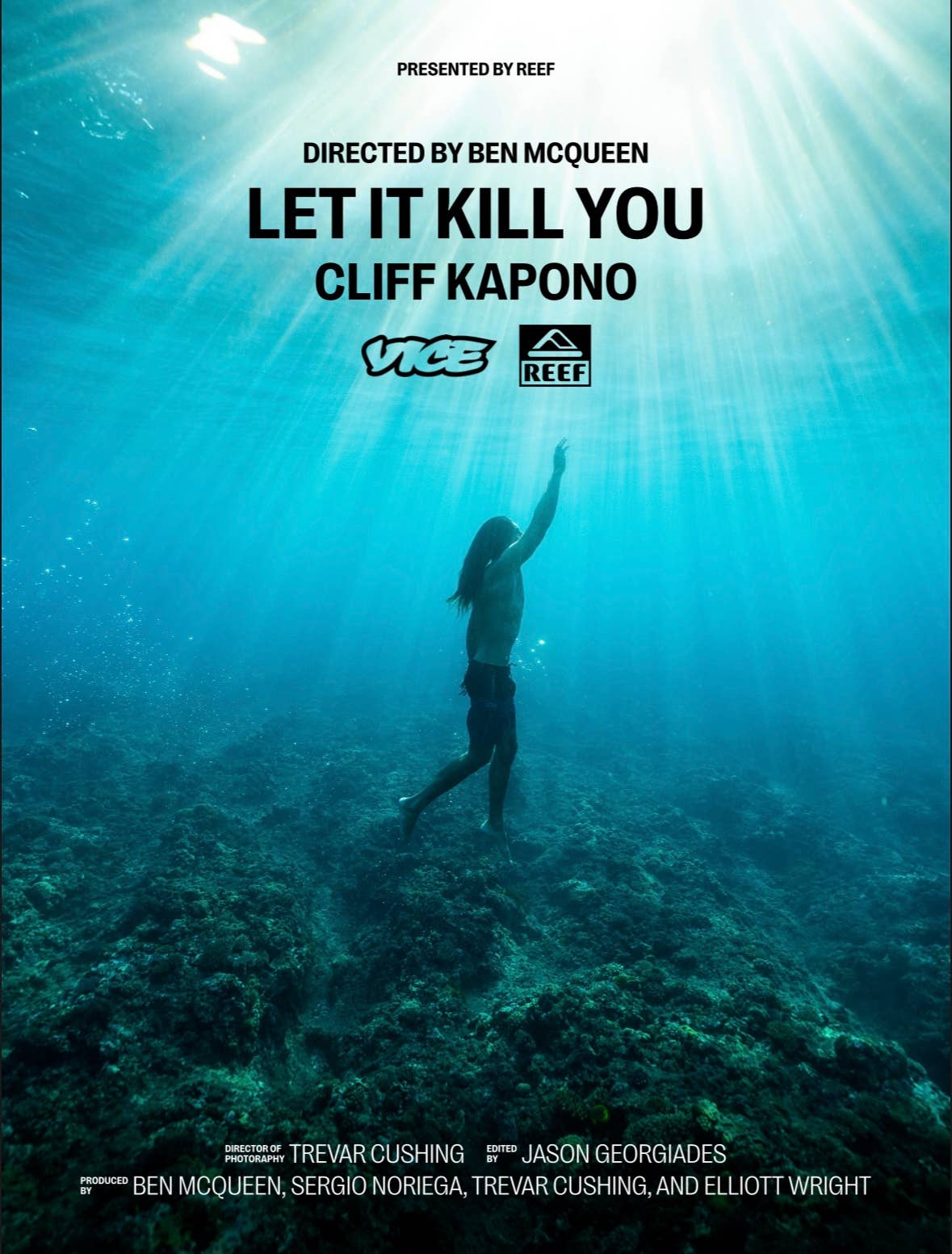
In the soon-to-come episode of the acclaimed series, Let It Kill You, we dive into the world of Hawaiian surfer Bruddah Cliff, also known as Cliff Kapono, Ph,D. The story weaves his personal experience and narrative, with supporting statements from legends like Gerry Lopez, Rob Machado, and Tony Alva. The result being a close look at who is surely one of the most fascinating (and intelligent) people to professionally ride waves.
The name of the series comes from a quote by renowned author Charles Bukowski, “find something you love, and let it kill you”, an expression that equates to living your passion and not settling for anything less. Against incredible odds, we learn how Cliff has done just that and will fund scientific research through his nonprofit Mega Lab by any way that he can.
Vice
MEGA Lab stands for Multiscale Environmental Graphical Analysis Lab. It is a research lab founded by Cliff, John Burns, and Hauani Kane, with the mission of mapping 1 million reefs by 2030 with the help of citizen scientists that can be surfers, divers, skaters, or anyone who feels the call to join the movement. Cliff holds the unique distinction of being the only professional surfer in the world to channel his position and education into innovative ways to map and protect the oceans.
“When I first finished school and came home to Hawai’i, I went full on with Mega Lab–I thought I was going to lose all my sponsors. John said, ‘Fuck it, let’s go!’ Luckily, that didn’t happen and now my sponsors get behind the fact that we are developing tech to help protect our oceans and share it with those who need it. The fucked up part is that we have mapped more of the surface of Mars than we have the ocean. Maps are the cornerstone of every successful civilization! Back in the day, you wouldn’t have to question the benefit of having a map that showed all the nearby rivers and streams, a map that told you where you can fish and where you can get water–essentially telling you how to survive.”
Many surfers support environmental causes, Cliff takes it to another level day in, and day out. He’s challenging the concept of what it means to be a professional surfer and, inversely, what it looks like to be a world-renowned scientist that’s been featured in mainstream publications like the New York Times, National Geographic, TED, and The Explorers Club (to name a few). His surfing provides the context for his oceanic passion and, in no small part, his Hawaiian heritage.
Arto Saari
To take a step back, it’s important to realize that shortly before the illegal overthrow of the Monarchy of the Kingdom of Hawai’i, the islands boasted the highest literacy rate in the world and the royal palace had electricity years before the White House. By the time Cliff graduated high school in 2006, Hawai’i ranked last in literacy and education among the United States and there were only 50 native Hawaiians who held a Ph,D. For Cliff, who was one of the few surfers to ever come from Hilo who showed real promise to surf at the elite professional level, the point marked a major fork in the road—stay on the islands and keep surfing or continue his education on the mainland.
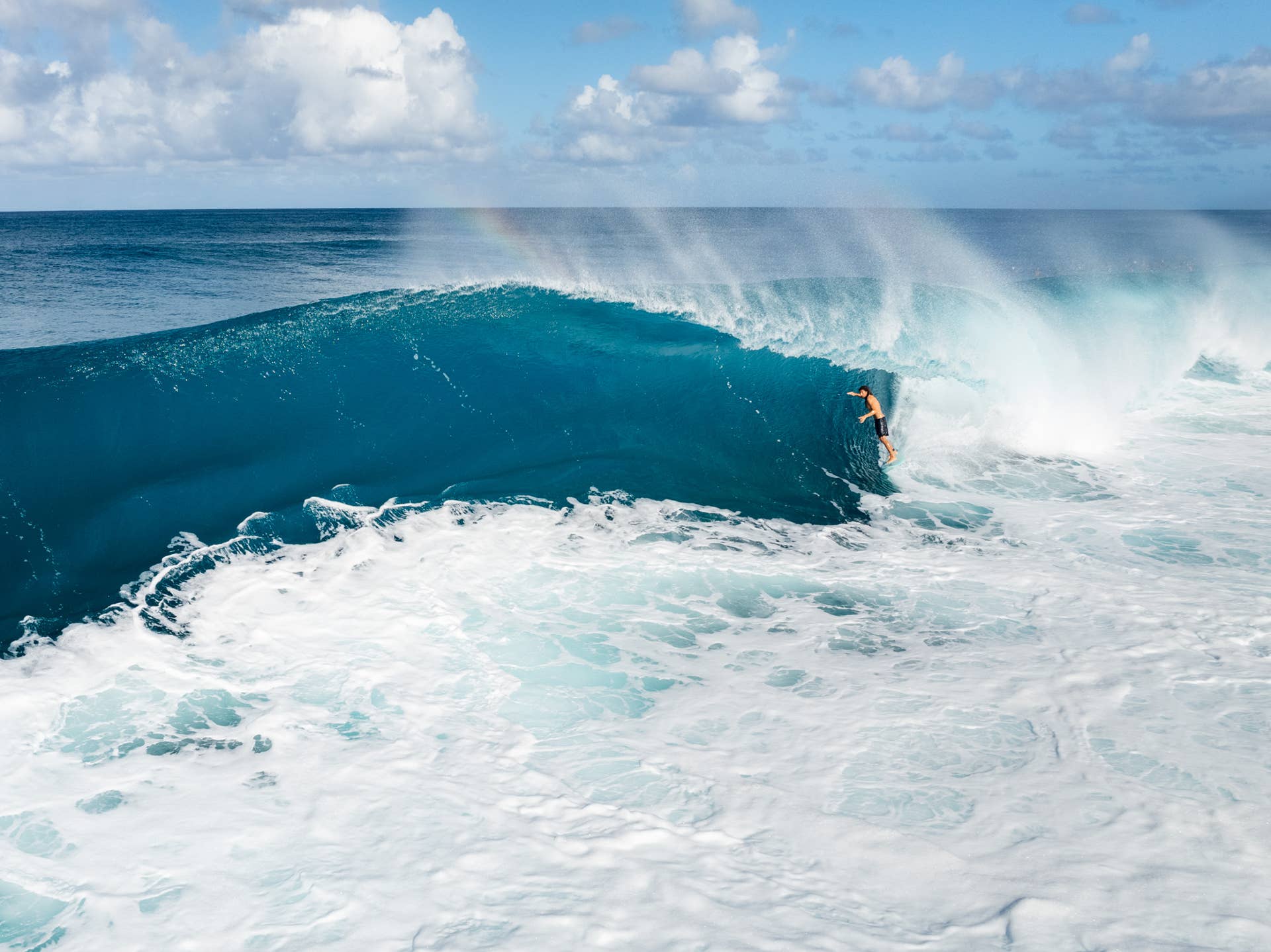
He says, “Luckily, with science, there was a lot of infrastructure to support and nurture my education. With surfing though, there was nobody in my corner.” Science and surfing were the same passion, he loved the Big Island so much it was to think about leaving for San Diego. To make his decision, he went on a solo mission to the ainas, a sacred place, and stayed there alone for one week. There he found his answers and ended up leaving for 6 years, a journey he says, “that was filled with dark energy. I got a lot of hate surfing in San Diego, whether at Blacks or other spots nearby, guys saying shit ‘you don’t belong here’. It wasn’t until years later, when I started surfing Pe’ahi (Jaws) that helped me eliminate all that negative shit.”
Ryan "Chachi" Craig
Gerry Lopez calls him, “the smartest, best surfer on the planet.” Rob Machado, his close friend and doppelganger, adds, “We’re lucky whatever happened to Cliff, happened to Cliff.” Sage words from the California style-lord who’s often seen sharing waves with Bruddah Cliff around San Diego.
One of the things that happened to Cliff was the formation of his pivotal friendship with John Burns, now his partner and Co-founder at Mega Lab. “You know, I honestly didn’t trust white people before I met him. I come from a Hawaiian community on the Big Island, based on our history and experiences, we didn’t trust white people—we were always lied to, again and again. I met John through skating and over time I got to see that he was worth my time. You know, the crazy part is that we didn’t even talk about science at first, we were just skating and partying together. He’s from South Africa, he grew up during apartheid and I could tell he had seen some shit. When we got into science together, then it hit this whole other level.”
To listen to Cliff speak is to hear someone with a deep knowledge and passion, without any pretense or self-importance, his passion is pure to the core and he’s not shy about speaking his mind. “You know, I used to be pretty anti-academia. I still loved science but I thought the gatekeepers–you know white guys in white coats–were mostly kooks. They were so convinced they were smart as hell and above everyone else but those fools couldn’t see the forest for the trees. You know what I mean?”
We certainly do Cliff, and we salute you. For anyone looking to donate, learn more, or get involved with Mega Lab, check out their site here.