



Nearly every coast loves the fall. Europe is magical. California becomes golden. The wind lays down in the tropical Atlantic. East Coasters won’t travel anywhere for fear of missing those fleeting weeks of fall swell before the water temperature drops. In fact, right now, all eyes are on #Invest92, which could become Tropical Storm Gabrielle by the end of the week.
But in a month or so, the North Pacific will stir. The Atlantic will start firing surf toward the Caribbean. And it will be time to book flights in search of waves, warmer water and all manner of coastal adventure. But while air travel looked like it could become better and more efficient, recent developments don’t point to that for surf travel this winter.
First, surfboard fees are not going down and luggage fees are certainly on the rise. SURFER reported that longboard legend, Joel Tudor claims he was turned away at the airport by Hawaiian Airlines without a refund this week for trying to fly his longboards to Hawaii. Additionally, prices for checked bags have gone up across the board this month.
Related: Joel Tudor Gets “Denied” By Hawaiian Airlines For Longboards
The new rules coming down from the US Department of Transportation would have made air travel better for surf travelers, a group that is not always been treated great by airlines, but anyone flying. Obviously, cash refunds are nice. But new rules would have created significant incentive for airlines to practice better service. As the law stands, it is fully legal for airlines to overbook flights, which causes a lot of issues for air travelers.
Weather delays are a whole other issue. Surfers, who have a better understanding meteorology than the average air traveler, can comprehend why those occur. The new laws were aimed specifically at airline practices that caused delays and cancellations.
At that time, US Transportation Secretary Pete Buttugieg said, “Passengers deserve to get their money back when an airline owes them – without headaches or haggling. Our new rule sets a new standard to require airlines to promptly provide cash refunds to their passengers.”
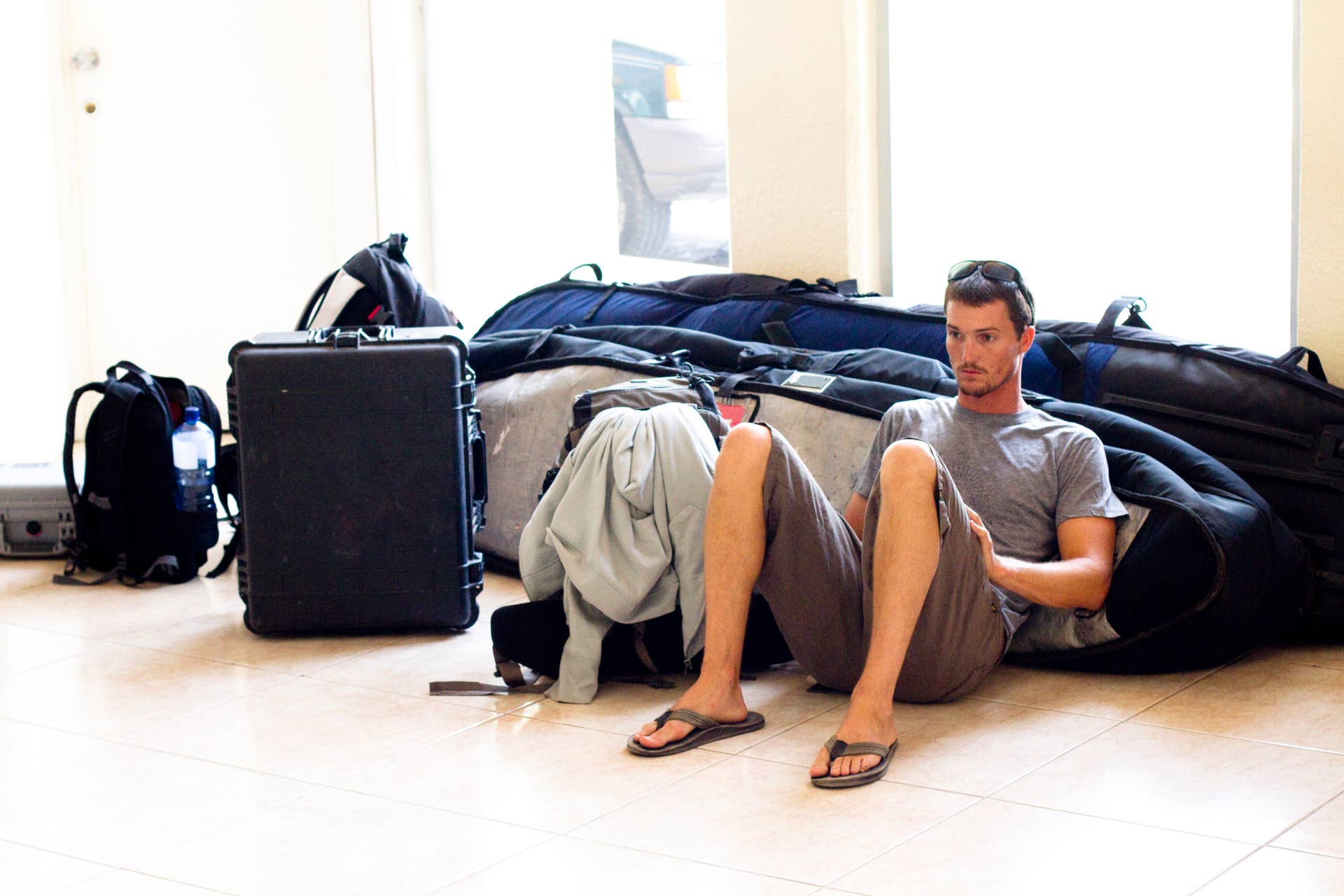
Getty Images
To be fair, airlines do compensate travelers if they take responsibility, but there are no laws in place. The new regulations would have, for the first time, legally defined “significant change” in itineraries as “changes to a flight include departure or arrival times that are more than 3 hours domestically and 6 hours internationally; departures or arrivals from a different airport; increases in the number of connections; instances where passengers are downgraded to a lower class of service; or connections at different airports or flights on different planes that are less accessible or accommodating to a person with a disability.”
As any traveling wave hunter knows, these are more common than we would like.
In addition, passengers who filed a mishandled baggage report would have been entitled to a refund of their checked bag fee if not delivered within 12 hours of their domestic flight arriving at the gate, or 15-30 hours of their international flight. Plus, there would have been guaranteed refunds for any extra services not provided such as Wi-Fi, seat selection, or inflight entertainment. The ticket agents would have been required to make credit card refunds within a week.
But, unfortunately for anyone packing a boardbag for winter sojourns, the current administration will not put these into law.
A statement from the Office of Information and Regulatory Affairs put out a statement acknowledging the new regulations as requiring U.S. and foreign air carriers to adopt and adhere to customer service plans identifying essential services (meals, rebooking, hotel, transportation to or from hotel, timely customer service) and compensation which airlines would be required to provide to mitigate passenger inconveniences when the cause of a cancellation or delay for flights to, within and from the United States was due to circumstances within the airline’s control.
According to the statement, “Consistent with Department and administration priorities, the Department plans to withdraw the Advanced Notice of Proposed Rulemaking.”
Airlines for America, the trade group that represents air carriers has advocated against the changes, calling instead for more deregulation.
It looks like another winter of passengers competing for overhead compartment space to save on checked bags. And Surfers may just have to include a few bucks in the budget for travel insurance moving forward. Or at least $12 for a large smoothie for that delay on the flight home.