



A kaleidoscope of butterflies swarmed the highway. Thousands of ‘em. Little specks of yellow zooming past the barren, yet beautiful, Baja landscape as we made the lengthy trek from Loreto (and the Sea of Cortez) to San Juanico (and the Pacific).
Besides the butterflies, the land was so desolate, so bleak, and so harsh. I wondered: How can anything survive out here? I brought this query up to the man driving me, Victor, and he quickly reassured me. He pointed out all the different estuaries along the way, the myriad wildlife, a coyote skittering across the road in the early morning light, and the birds. Victor is a big-time birdwatcher. He can hear the sound of a bird call, and tell you exactly the species – lesser nighthawks, blue herons, turkey vultures, osprey, and many others.
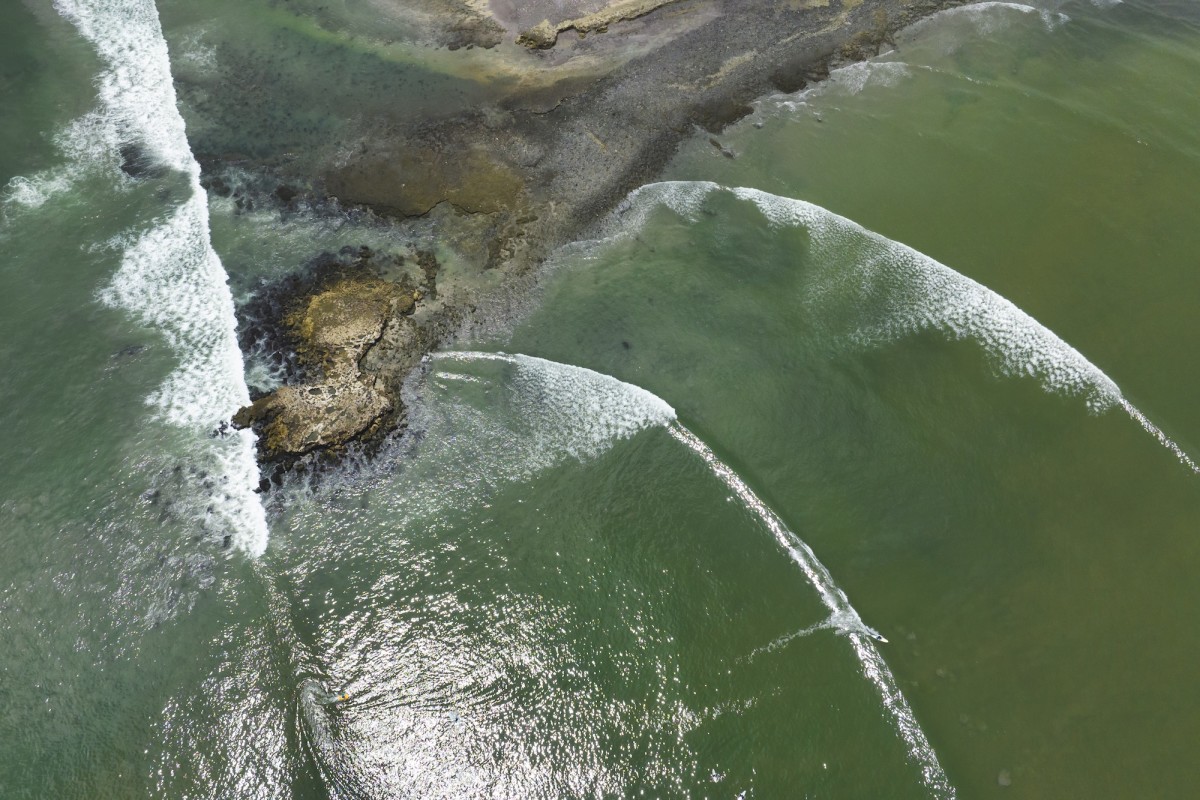
The goal of this expedition, of course, was to surf. And to score the famed, coveted righthand pointbreak of Scorpion Bay. But full disclosure up front: I did not score. The day after I left the tiny fishing village of San Juanico, a hurricane swell hit; but during my time there, it was nearly flat. Perfect, practically mechanical, ankle-high waves rolled from third point down to second, leaving the imagination to wander…what if? But so is life. And so is the nature of surf travel. Sometimes you score, more often you get skunked.
If anything, it only added to the mystique of this place that I’d heard about in hushed tones for so many years, and mainly, left me yearning to come back.
Alfredo Martinez/Getty Images
But still, even without waves, the town of San Juanico is special. It’s long been a secretive hub for surfers when compared to more popular haunts of Baja to the north (Ensenada) and the south (Cabo San Lucas). It’s undergoing change, with gringos continuing to grab land along the points, stirring controversy within the community. Hell, there’s even a pickleball court now in the center of town – more on that later. Imagine the look of the supposed American smugglers, who, according to lore, “discovered” the spot in the 1970s, surfing the waves, keeping it secret, and dubbing the place “Scorpion Bay,” thanks to the long tail of landmass sprawling up the southern edge of the sprawling inlet. Like all things, though, secrets don’t remain secret for long.
While I knew about the fragile nature of Scorpion Bay going into it, and the hesitation that comes with that – how will the locals react to outsiders? – I was met with open arms from the start. From making new friends with Canadians van-lifing along the point, to sharing laughs and drinks every sunset with locals and gringos combined, to getting invited to a longtime local’s mother’s home for lunch, the community was warm and welcoming.
And one local, in particular, stood out. Jesus “Rana” (frog) Mayoral was a formidable force in San Juanico. With his long, wiry mustache, his gumby-like frame, and his unrelenting kindness, Rana was like an elder statesman of the community. He took me around town, showed me how the wave works, talked history, controversy, the future, and more.
Rana comes from Baja. His father was the first to start a whale-watching business in San Ignacio Lagoon, and from a young age, Rana followed in his father’s footsteps. From there, he found surfing in Cerritos outside of Cabo San Lucas, and fell in love. And that led him in search of waves. “When I came to San Juanico,” he says, “I never left.”
So, under a toenail thin moon during one of our nightly sunset surf checks at the third point lighthouse, with the sky turning a profound purple as the stars peeked out and the peripheral (but still perfect) waves rolled through below the cliff, I picked Rana’s brain about all things Scorpion Bay. Or, as he emphasized, San Juanico.
Here are some snippets from our conversation, in addition to some helpful tips for anyone looking to explore this untouched slice of Baja bliss.
“It’s not ‘Scorpion Bay.’ That’s just the name people have given it. This is San Juanico. We don’t want to lose the essence of being a Mexican town.”
Jesus “Rana” Mayoral
When to Go
Alfredo Martinez/Getty Images
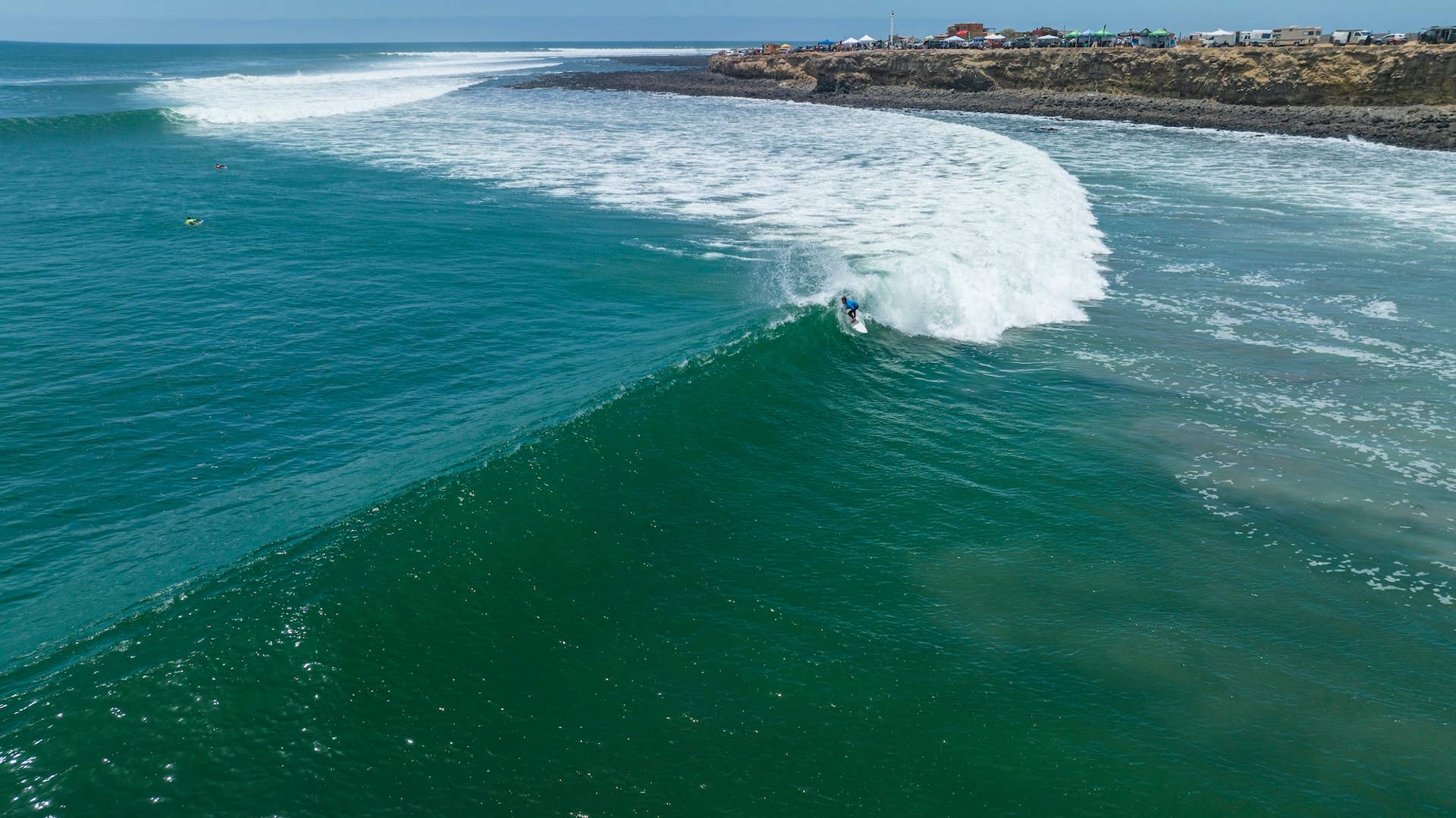
Peak season for scoring surf in San Juanico is summer – typically May through September, when south swells make their way up from the South Pacific and New Zealand, then travel up to Mainland Mexico, Baja, and Southern California, is primetime.
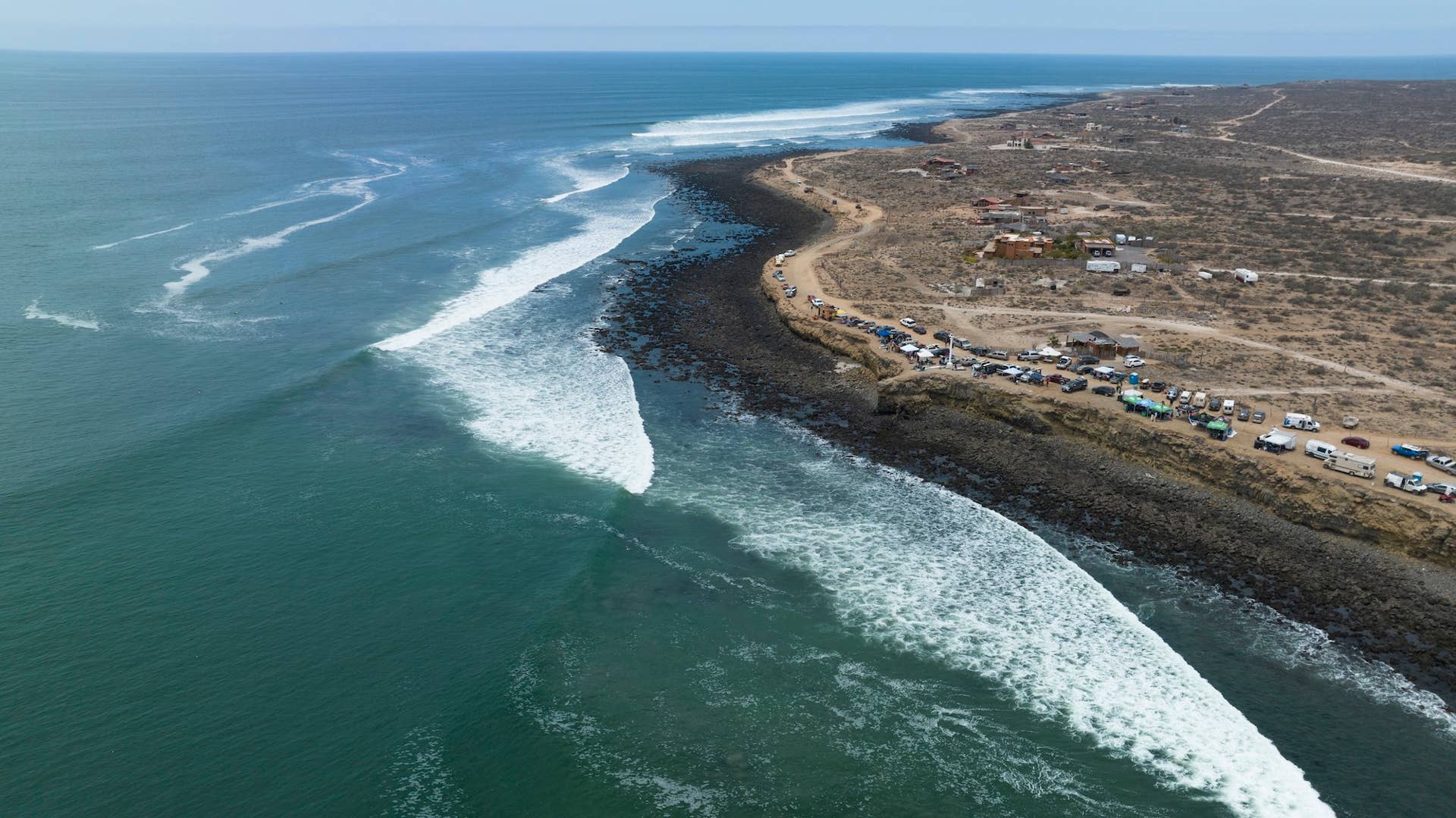
“Scorpion Bay is most well-known for the connections,” Rana says. “That’s when fourth point, connects to third, connects to second, and so on. That happens with a pumping south swell. It used to connect all the way to Panga Beach, but occasionally, if it’s really good and really big, you still can.”
However, don’t be surprised if you score in other seasons either. Rana continues:
“We get south swells during the winter only occasionally. We mostly get them during the summer. But also, we have good waves during the winter. North swells and west swells hit good at seventh and sixth point. But yeah, the classic Scorpion Bay that everyone is trying to score? That’s the south swells during the summer.”
How to Get There
Dashel Pierson
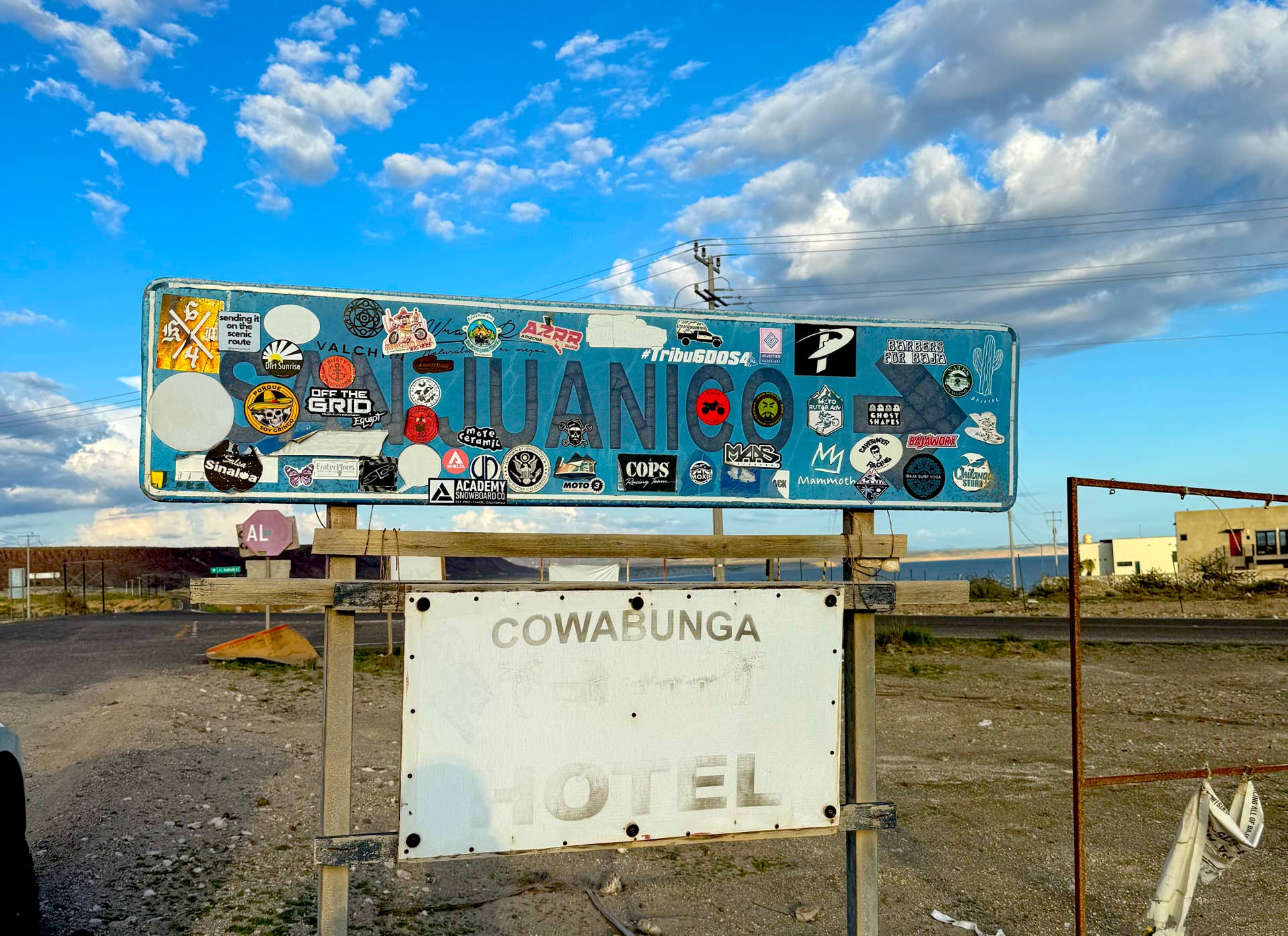
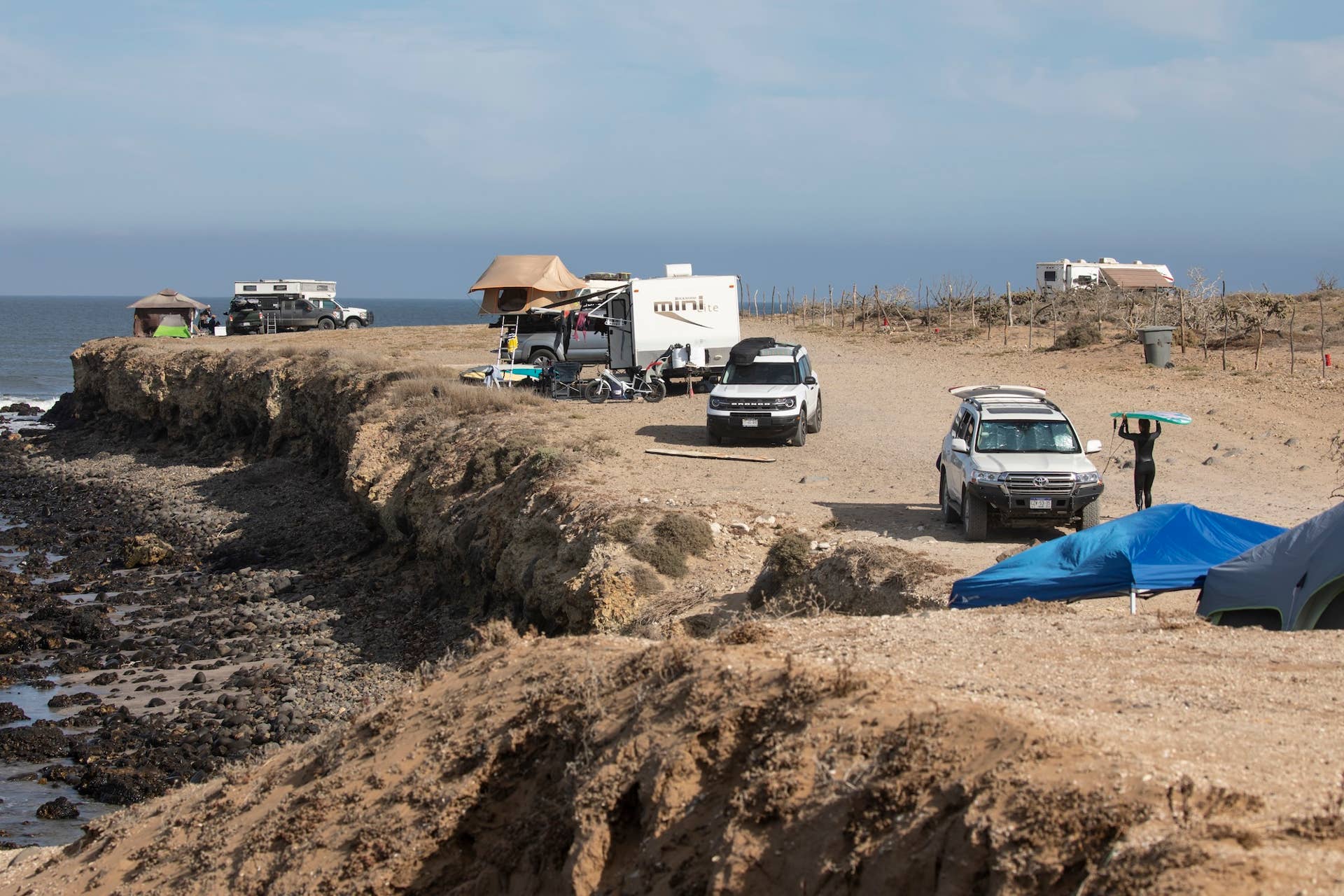
Driving to San Juanico is possible, although from the border, it will take about at least 12 hours and you will need a tourist visa. Many folks make their way on four wheels, so they can have their camper van, which is popular along the cliffs overlooking the waves. There are many cool spots during the drive to check out, but fuel can be scarce; be prepared.
The easier option is to fly into Loreto, and then it’s a three to three-and-a-half hour drive across the peninsula to the Pacific side and San Juanico.
Where to Stay
There are a handful of options in San Juanico for accommodations. As mentioned previously, car camping is a common choice. However, there are other spots in town, like the Scorpion Bay Hotel, which offers free breakfast, Wi-Fi, hot showers, and much-needed air conditioning.
As for myself, I stayed at the chic Casa de las Luces – a compound of minimalist, yet elegant, suites, apartments, bungalows, and even glamping tents. The accommodations were a welcome reprieve from the harsh desert landscape – despite the lack of A/C – with the comfy beds, fire pits, modern architecture, and stunning views of sunset and sunrise from my own personal balcony. Although there wasn’t any food provided at Casa de las Luces, just down the street was El Burro en Primavera, a homestyle eatery serving delicious tacos, chilaquiles, margaritas, and more. They also have rooms for rent there. I recommend the shrimp tacos.
The Vibe
Alfredo Martinez/Getty Images
Like I said before, the locals of San Juanico were extremely cordial. From the first night I arrived at the lookout point on third point at sunset, where a handful of residents congregate for ritualistic surf checks, I felt accepted sincerely. Soon, I was going to these guys’ houses, searching for waves with them, and being taken in with open arms.
In just a few days, I made friends for life. And I can’t wait to go back and see my new buddies.
“We like visitors,” says Rana. “We know when people start showing up, that means a swell is coming. It’s like clockwork. That’s our heads up that something good is on its way. The town thrives on the visitors. The economy grows every time we have a swell, and all those surfers come to town. Just come with a smile, and be friendly. That’s all.”
What to Bring
Alfredo Martinez/Getty Images
First of all, in the summer months, San Juanico is hot. Pack accordingly.
In terms of surfboards, whatever floats your boat. If you’re looking to rip, and there’s a hefty south swell on the horizon, bring your high-performance shortboard. But further down the points, you’ll be able to find softer, more longboard-friendly waves.
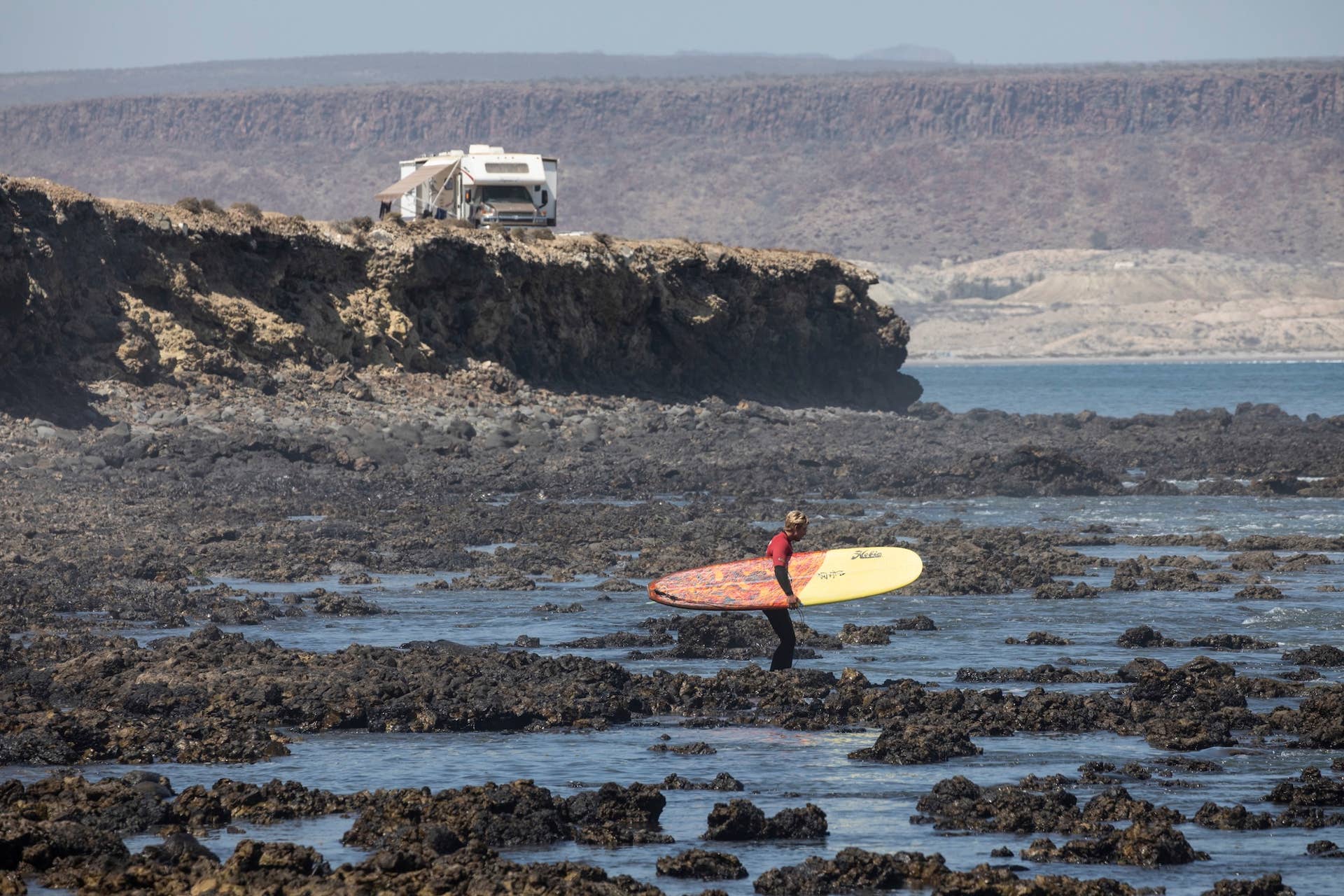
One thing I’d wish I brought: reef booties. Kooky? Yes. But when doing the rock dance over the tidepools riddled with urchins, I’d gladly sacrifice looking “cool.”
What’s more, the locals have anything you need to rent. As Rana says:
“We have rentals, board rentals kayak rentals, quads, ATVs, popup tents. We can do tours around the area, fishing tours. We do surf lessons and excursions for every type of surfer and skill level. You can just fly into Loreto, and we can set you up with everything.”
How Its Changed
Alfredo Martinez/Getty Images
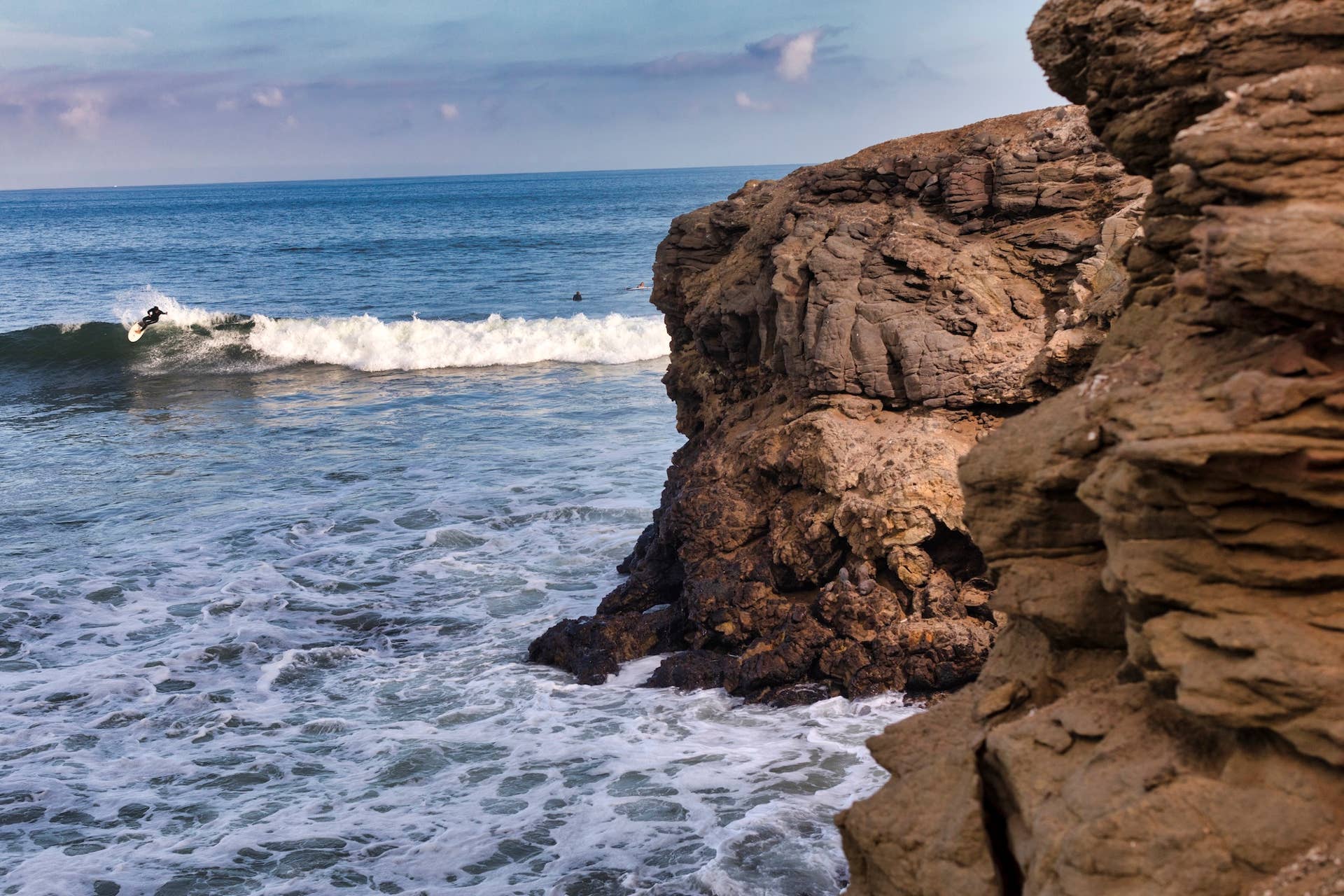
“It has changed in a lot of different ways,” Rana says. “We used to have a big, sandy beach.”
Now, the points along Scorpion Bay have eroded into a cornucopia of rocks. At low tide, getting out to the surf means a trek down a dirt goat hill, then traversing a minefield of urchin-infested tide pools. (I still have an urchin spine burrowed in my heel.)
And according to Rana, the waves have changed since the sand left:
“It used to be a perfect tube right at second point. Every single wave was a tube. Whether it was a little wave, or a bigger wave. All of them were tubes. Everyone was looking for that famous PuntaPequeña wave.”
Of course, in addition to changes in the waves, Rana says: “It’s also gotten a lot more crowded.”
What to Expect (in Terms of Waves)
Alfredo Martinez/Getty Images
Well, it all depends on when you go, and what the swell is doing. For me, I went in late September. And while I didn’t score much, when it came to waves, there was a solid south swell that hit the day after I left.
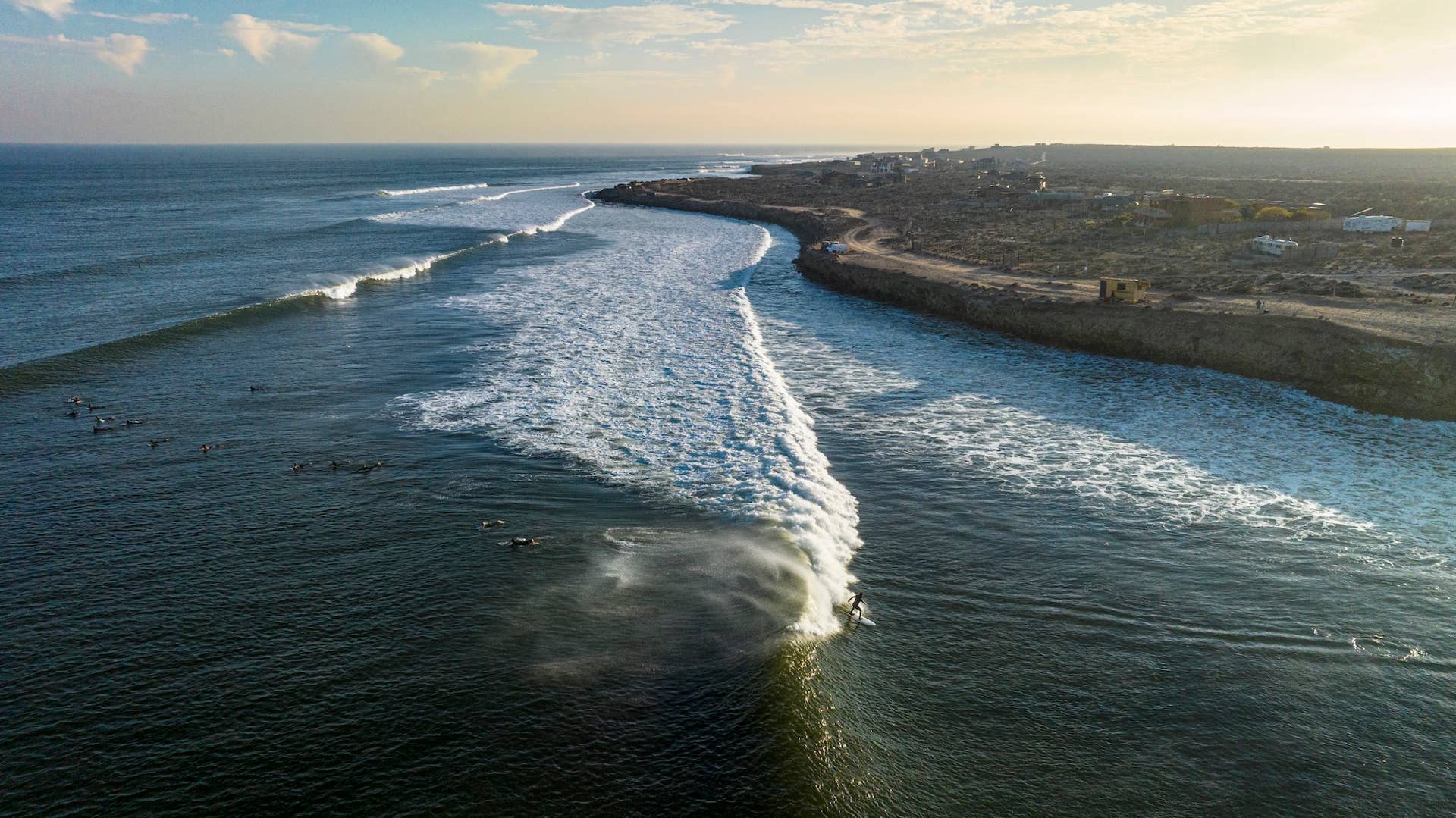
And when it’s on, it’s been described as one of the best righthand pointbreaks on earth. Hence whey surfers have attempted to keep it secret for so many years. You better practice your squats before coming, because the thigh-burn is real. During a pumping swell, waves can break for hundreds of yards, spanning from point-to-point.
But that’s not to say there’s no waves for the beginner crowd, either. Because there are. As Rana says: “Second point, especially right now, is not as big as it used to get when the sand was there. It’s more of a mellow wave. It’s good for beginners.”
Additionally:
“When we don’t have a lot of swell, Esterito Beach on the other side of the bay gets good. It’s a sandy beach. When the swell is right, it’s great for beginners.”
What to Do (Besides Surf)
Alfredo Martinez/Getty Images
There’s no resorts, no clubs, no pool parties in San Juanico – unlike its neighbor to the south, Cabo San Lucas. But this is what people seek when they come here; they seek the solitude, the closeness with nature, the off-the-grid experience of a rogue Baja adventure. This is a trip for folks who don’t mind a little dust and grime. In fact, they like it.
So, when there aren’t any waves, there’s a number of ways to spend your time. You can rent an off-roading vehicle – an ATV or dirt bike – and explore the trails surrounding the town. You can get your sweat on with a game of pickleball in the town square. You can explore the local estuaries and see a variety of native wildlife. You can feast on fresh, endless lobster, when in-season, from the heaps of fishermen in the village. And much more.
For me, it was just nice to be off-the-beaten path, away from the frivolities of modern city life, look up at the stars at night, shoot the shit with the locals, decompress in the desert heat, and soak up the magic of San Juanico. It’s what surfers have been seeking in Baja for decades – an escape from the daily grind. It’s one of the last bastions of perfect surf, without the luxe hotel vibes, in Baja. Or anywhere for that matter. And it probably won’t stay that way forever.
Related: Surf, Sun, & Cervezas: Blair Conklin’s Guide to Cabo San Lucas