



How much is surfing worth to a community? In this case, it’s not a metaphorical or emotional question. It’s financial. A newly released, first-of-its-kind study has a science-based deep dive into that query for Santa Cruz, California. The answer may surprise you.
The study, “Climate Vulnerability Of California’s Natural Surfing Capital”, was led by Santa Cruz-based international nonprofit Save The Waves Coalition, in partnership with Integral Consulting and Black Surf Santa Cruz, with support from the California Ocean Protection Council. It analyzed 31 surf breaks within the seven-mile-long Santa Cruz World Surfing Reserve, surveyed more than 500 people and convened workshops with residents, businesses and advocacy groups. The underlying idea behind the project is that this data can help inform decision-makers (both in Santa Cruz and elsewhere) on the importance of surf breaks in coastal planning and management.You can read the nuanced 50-page report here.
The economic findings are significant: The study concluded that surf recreation in Santa Cruz generates $44.5 million annually. That money is coming from an estimated 313,901 individuals who account for more than 783,000 “surf visits” (i.e, sessions) per year. Each trip to the water had an average value of $56.82, a figure calculated using a model of travel costs (72 cents per mile) plus opportunity cost (calculated by taking 1/3 of the average hourly rate using the midpoints of the income range from the survey respondents).
But in addition to the surf travel, the study determined that an additional $150.2 million is spent annually across the broader Santa Cruz region on surfing goods and services ($1,906 per person on average). In total, that’s $194.7 million each year from people who have an insatiable appetite for 4/3 millimeter wetsuits and right-hand pointbreaks. However, if sea level rise gets extreme without adaptation measures, many of Santa Cruz’s frequented waves could be irrevocably worse, and tens of millions of dollars could be lost at sea.
“Surfing is more than a sport in Santa Cruz; it’s a cultural, economic, and environmental cornerstone,” said Nik Strong-Cvetich, CEO of Save The Waves. “This study confirms what many in the community have felt: climate change is not a future issue. It’s impacting our coastlines now and it’s happening for more surf cities in California than just Santa Cruz.”
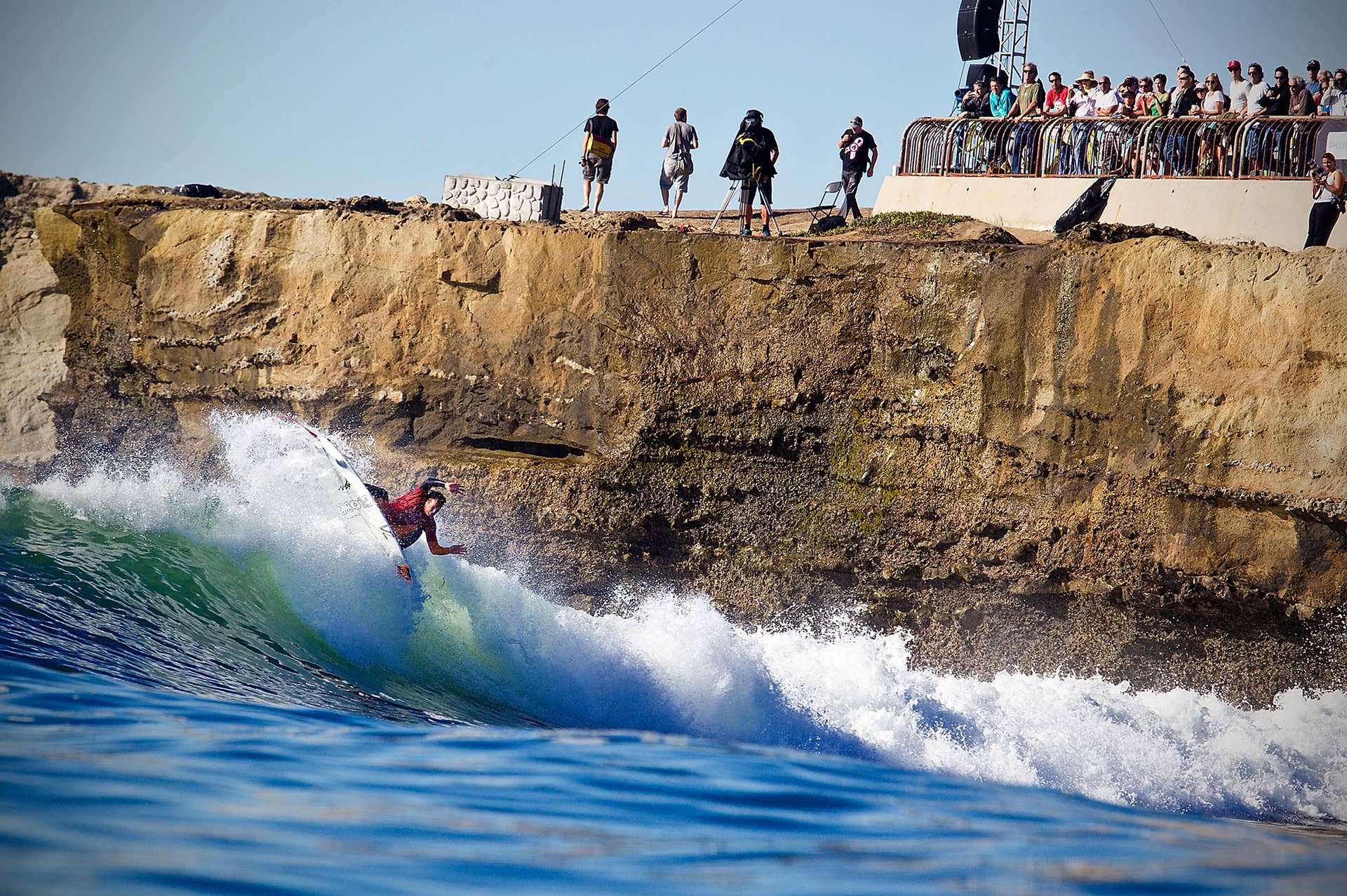
Sean Rowland/World Surf League via Getty Images
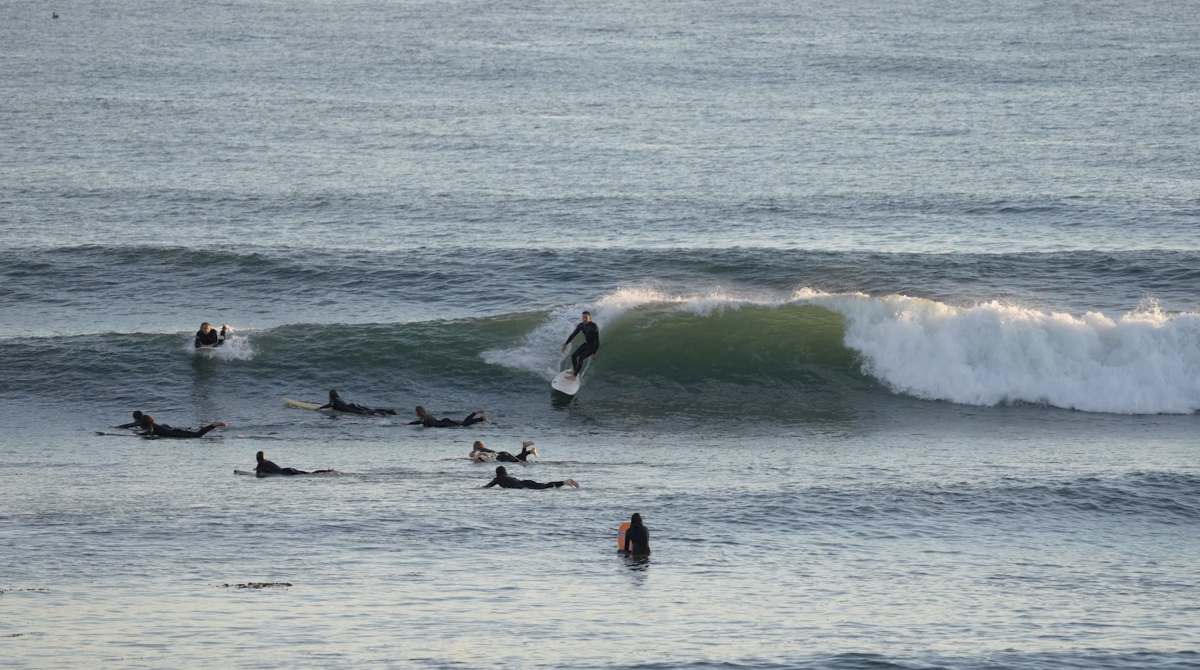
A key part of the study was that it identified the degree to which waves in Santa Cruz will change due to rising seas. “We worked with local surf condition experts — surfers with decades of first-hand experience in Santa Cruz breaks — ensuring the project reflected deep, lived knowledge,” said Shaun Burns, a local coordinator for Save The Waves (who happens to be one of the best surfers in town). “Their insights on tides and conditions grounded the analysis of each break in authenticity and allowed us to map sea level rise, showing how the surfablity for these waves may change over time.”
Joel Hersch/Save the Waves
The study defined surfable conditions as “conditions needed for a breaking wave to be considered rideable by a surfer, calculated as a percentage of time with surfable conditions in daylight hours.” After crunching the numbers, Save the Waves found that all 31 surf breaks in the reserve will see a decrease in surfable conditions with just 1 foot of sea level rise. At 3 feet of sea level rise, 20 surf breaks will become “rarely surfable” or lost completely if no adaptation measures are taken, according to the study’s panel of experts’ Surf Break Vulnerability Assessment.
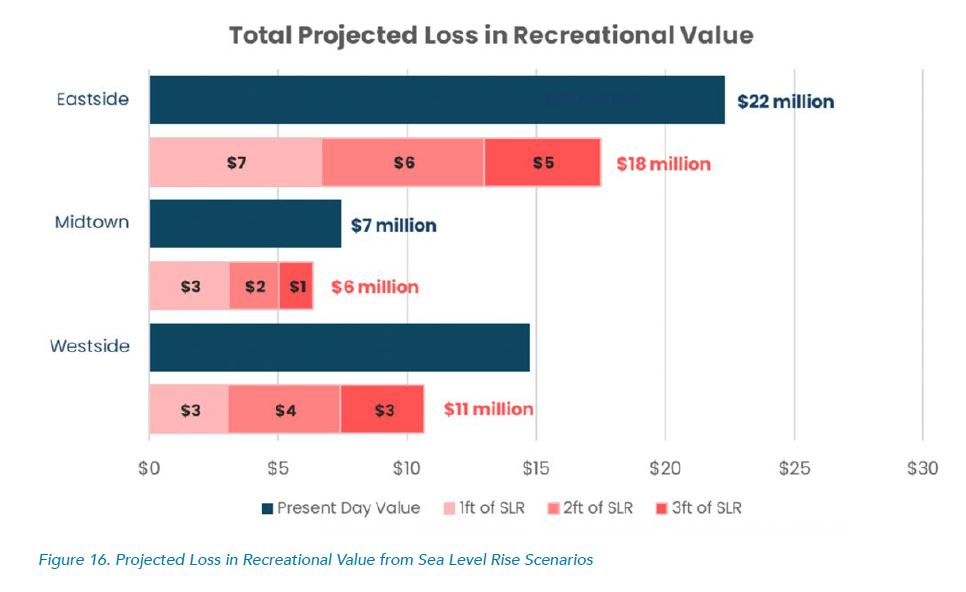
The result in that scenario could be devastating. Not just for the surfers, but for Santa Cruz’s economy. “Based on the number of hours suitable for surfing at each surf break,” the report states,” 3ft of sea level rise would result in an estimated loss of $34.5 million per year.”
Save the Waves
“We now understand at a granular scale how a local economy is bolstered by the sport of surfing,” said Trent Hodges, the study’s lead author. “At Save The Waves, we knew we needed more than Surfonomics. So we studied how that economic value is threatened by climate change through the loss of surf breaks to sea level rise.”
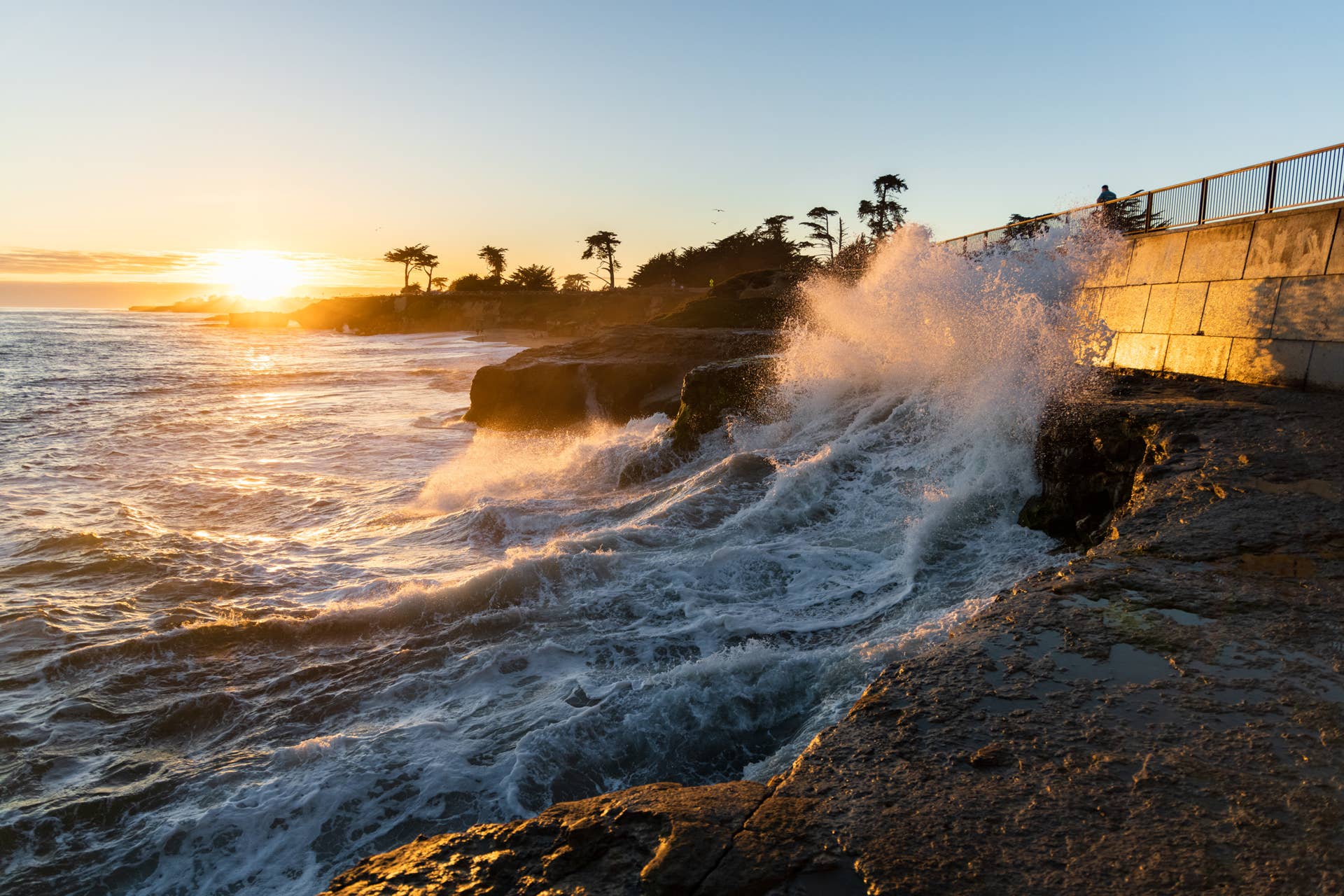
Through consultation with Black Surf Santa Cruz, the project also sought to identify and address the social, physical, and psychological barriers frequently faced by groups historically excluded from ocean recreation. In regard to future sea level rise, the study identified several adaptation strategies like managed retreat, sand management and seawalls that, if done correctly, could keep waves breaking but also ensure economic returns.
Save the Waves
Researchers hope it serves as a model for other communities to measure the value of their wave, a helpful tool to convince lawmakers that surf spots are worth protecting.
“We have a much better understanding now of the surfonomics in Santa Cruz,” Strong-Cvetich said. “But more importantly, we have a blueprint for how to bring this statewide. Surf ecosystems need to be embedded in the policy process. If they don’t have status, if they’re not recognized, we are losing out on the natural capital that we have.”
Related: Saving Our Surf May Be the Best Way to Save the Planet