



Interviewing your parents is kind of like taking psychedelics,” Kyle Thiermann told me. “Nothing might happen, but a lot might happen, too.”
I love this quote partly for the humor and partly for the well-played analogy. Both acts seem intimidating on the surface, but they can provide powerful insight given the right conditions. For context, Kyle is an avid surfer, writer, podcaster and all-around interesting guy. His show is a revolving door of perspectives and personalities: Surfers, hunters, comedians, writers and scientists, he’ll pull up a chair for just about everyone.
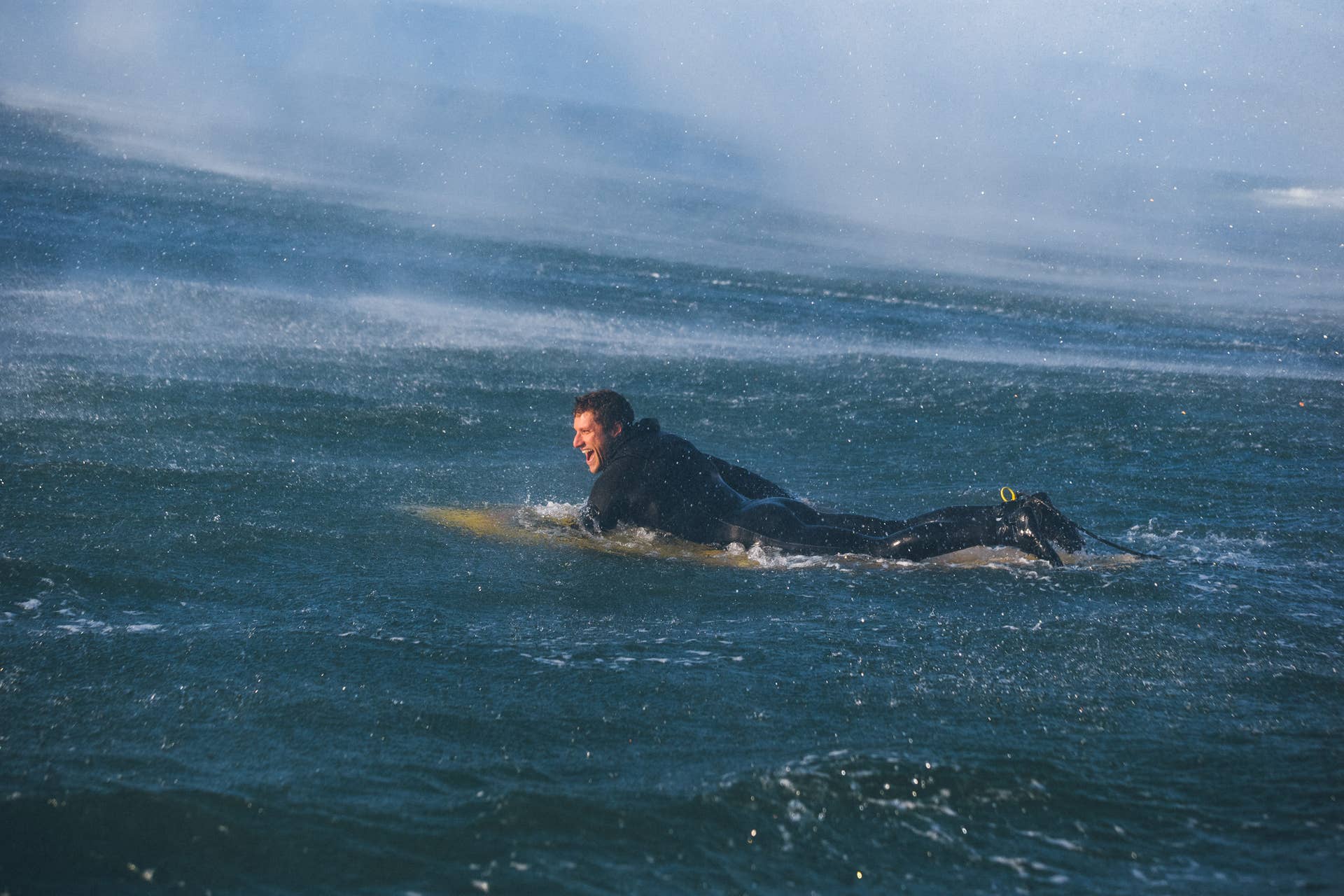
Ryan "Chachi" Craig
Kyle recently published his first book, “One Last Question Before You Go” (preorder here), which uncovers the value of asking your parents about their lives and how the right questions can deepen a meaningful relationship.
The best writing comes from lived experience, and that’s what we get here. In addition to sharing interview tips and sample questions, Kyle weaves in his own stories in a style that’s creative, funny, and brutally honest. He describes his upbringing in Santa Cruz’s countercultural and drug-heavy surf scene, how his mother and stepfather got invested in a conspiracy theory, how their beliefs estranged him from them, and the steps he took to repair the relationship.
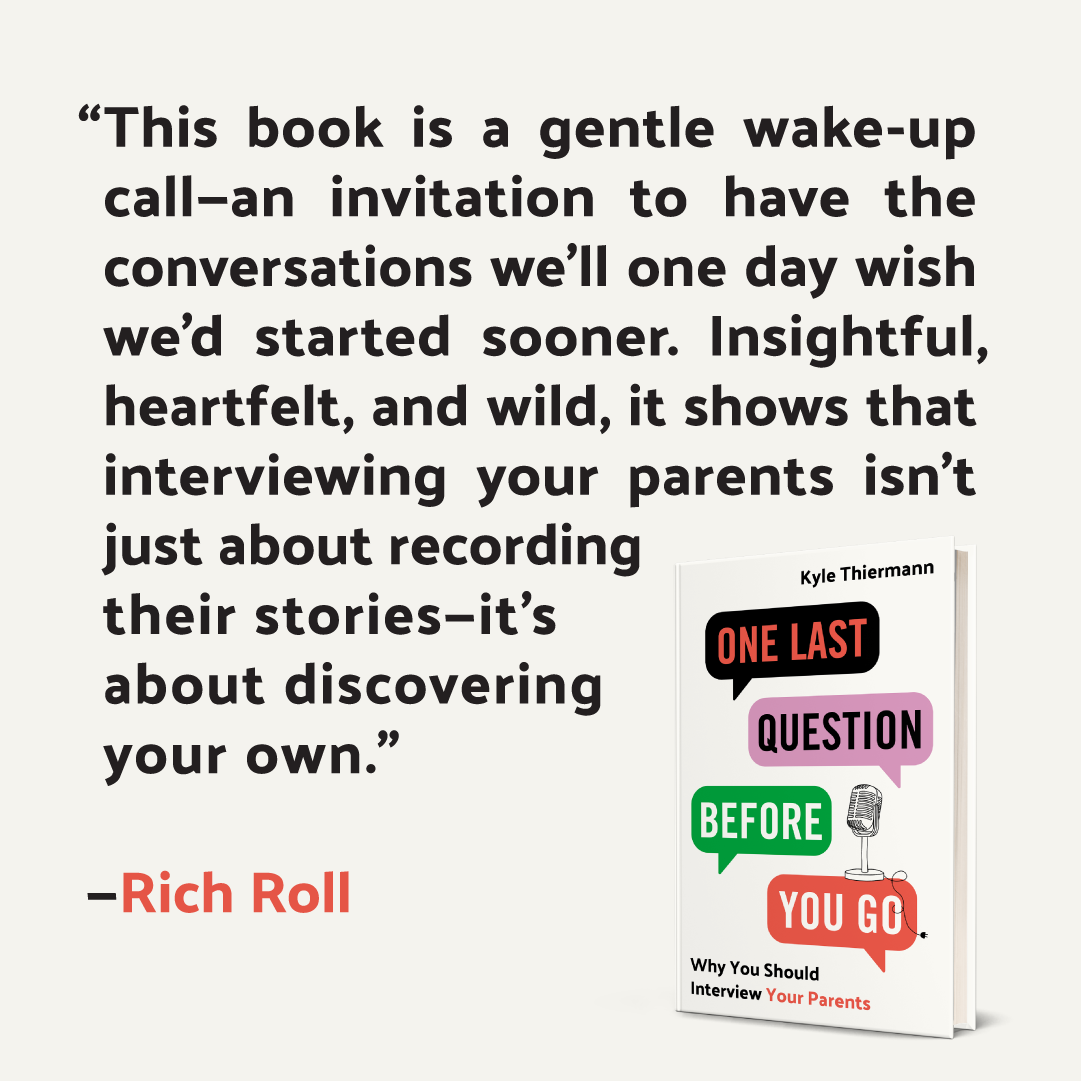
Surfing has long had a tradition of learning from its elders. Whether it’s specific surfers, radical shapers or iconic moments, respect for those who came before is baked into surfing’s ethos (It’s why the old guy out the back has priority). Plus, swapping stories is just as much a cornerstone of our culture as wave-riding itself. In collaboration with Kyle, SURFER is launching a fall campaign called One Last Question with surfers interviewing their parents, who share memorable surfing moments and advice for the younger generation.
The project took shape years ago when Kyle invited his father on his podcast, and the experience resonated for both parties. “Over the course of an hour,” Kyle wrote, “I learned more about my dad than I had in the 10 years prior. The podcast allowed me to ask questions that might otherwise have been too awkward and lock into undistracted time that was rare.”
View the original article to see embedded media.
Of course, hearing personal stories from parents can feel weird, awkward, even uncomfortable. But as Kyle explains, this is where the learning happens. Ask about their lives in their 20s. The good times and the bad. The challenges they faced, mistakes they made and what they learned along the way. One of the key insights from these conversations is that they’re a way to instill empathy and understanding at a time when so much is divisive. Intimacy is literally in your face. The medium of an interview is an opportunity to hear and respond to stories in a way no Instagram reel can.
“Asking about taboo subjects like death, sex, or money can feel weird, but they are invitations to intimacy,” Kyle writes. “Tension is necessary for any good interview, so if you feel your chest tighten or stutter midway through a question, you might be on the right track.”
Related: The Next Generation of Pipe Specialists
The following is a Q&A with Kyle about his new book, discovering family history, and the value of auditory surf storytelling. This conversation has been edited for length and clarity.
SURFER: Why was it important for you to write this book?
Kyle Thiermann: Everyone has a different relationship with their parents, and rather than try and pretend like I know exactly how to do this, the book is a story about how I went about doing it and the value that I found from it after my mom broke her hip and almost died. I realized that there were a lot of stories that I just didn’t really know about her or vaguely knew, and that we’re in an age where we have more information than ever, but these people that have these incredible stories and real keys into our family history and who we are as people, when they die, their stories die with it. Unless we step into that role as journalists and put on the journalist hat and ask those questions.
Related: How Pro Surfing’s Peaceful Protest Went Down In Apartheid South Africa
What surprised you when you interviewed your parents?
There’s something that didn’t make it into the book, but I’ve thought about it often. For a lot of people, surfing is a sport of posterity. The father hands it down to the son, the mother hands it down to the daughter. There are all these legacy surf families, whether it’s Michael and Mason Ho, Dino and Kolohe Andino, Christian and Herbie Fletcher, Tom and Pat Curren. I never felt like I had that. I didn’t have a surf family, and I kind of felt jealous. It made me feel like my connection to the ocean was not as deep.
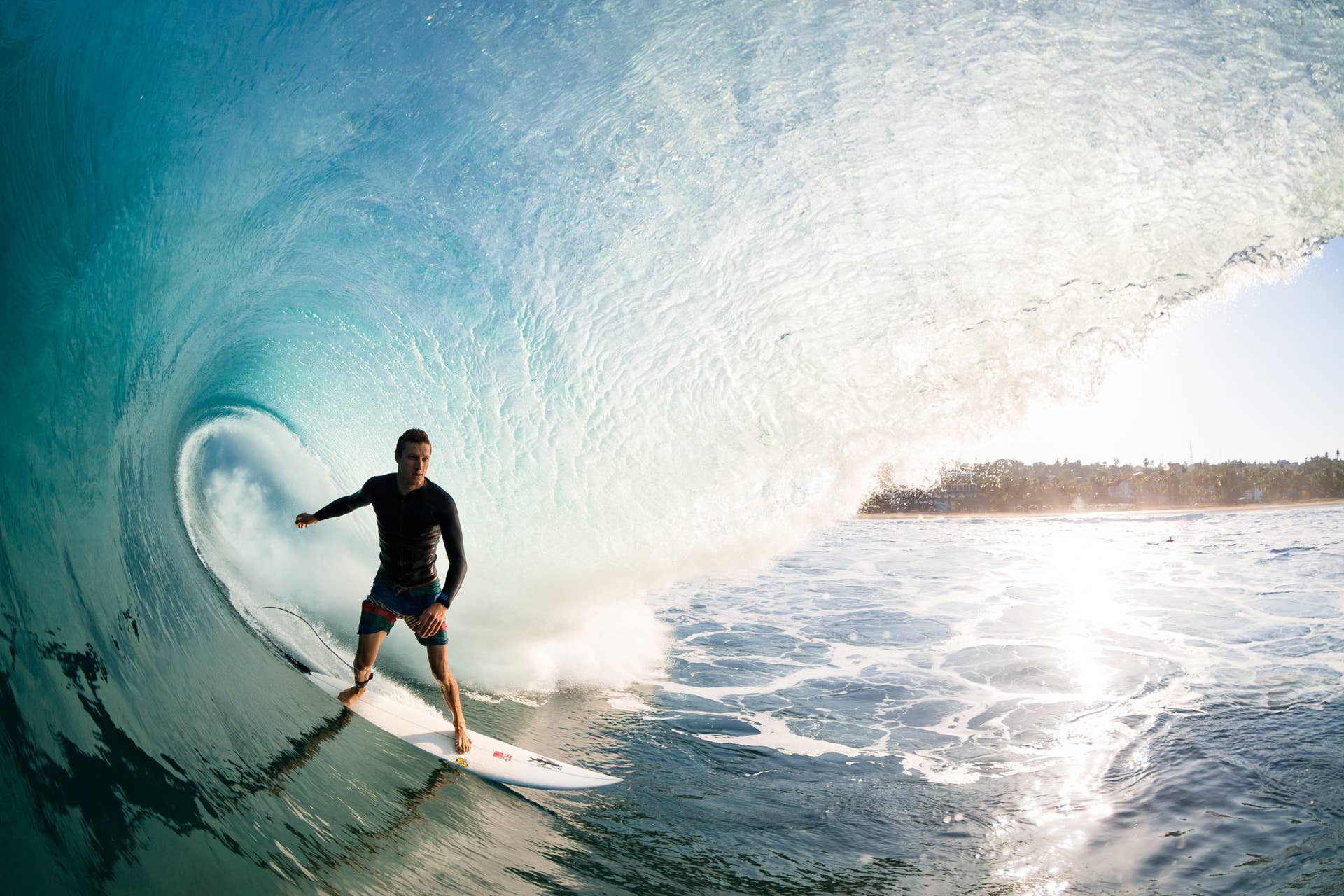
Ryan "Chachi" Craig
But when I interviewed my dad, who isn’t a surfer, he told me a story about his grandfather, who died way before I was born. He showed me this newspaper clipping from the 1800s of my great-grandfather, Walter, who swam the English Channel when he was 14 years old. The English Channel is a gnarly open water swim, and he made it in the newspaper, and apparently, he was this champion swimmer and waterman. He kind of looks like me with the same gangly body type, totally an ocean-goer. I think connecting ourselves to stories of our family history can shape who we see ourselves to be.
Related: How Important Is It to Have a “Surf Family”? by Sean Brody
How did your parents feel about being interviewed?
They were stoked to do it. After our first interview, my dad sent me an email, which I included in the book, and said, I think that a lot of parents feel like their children aren’t interested in them and relationships improve by asking questions and listening. That goes back to this idea that we are in a culture where most of us don’t really learn the skill of question asking, and that translates to our parents. That was an insight or a result of this book that I did not expect, which is that it feels kind of like a gift for your parents to be interviewed. Through this process and having had a number of friends interview their parents too, it’s a fun aspect for the parents, too, to prompt memories by looking back at these old photographs, which most of us have somewhere tucked away, but we’ve never really spent the time to go through.
Related: Hey Dibi: How Does a Worried Mom Survive in a Family of Extreme Sports Athletes?
Have you noticed any repeating trends in surf-related interviews?
Thefirst thing I think is fun to ask your parents who are surfers is what surfing was like when they were growing up. We all think about how great it would be to be a surfer in the 1960s or ‘70s. Some of those stories will be forgotten if you don’t nail ’em. And as an example, Frank Solomon interviewed his dad, who was one of the first surfers to show up at Bruce’s Beauties in South Africa before the Endless Summer guys showed up.
Frank texted me some old black and white video of his dad longboarding out at Bruce’s just trunking it. That’s just one example of how, if you don’t take the time to ask about those surf stories, you’re never going to be able to pass those on to your kids. You’re just not going to know.
In another one, we had John Mel interview Peter Me, and they’re both real surf-aholics. One of the things I bring up in the book is to go beyond the facts of someone’s life. Get into the feeling of what surfing means to them. And one of the questions that John asked his dad was, what always puts you in a good mood in the morning? Peter said surfing, and then John said, me too. And then there was this pause. It’s a cool moment to have. And those things don’t happen if you don’t set it up in an interview context.
Related: Peter Mel’s Goliath Tube at Maverick’s, via Fred Pompermayer
Talking surf is such a fun thing to do, and that could be an easy bridge to start a conversation with your parents if they’re into it too.
Yes, and I’d argue talking story is a fading skill. Because in the old days, you had to describe what it was like to come upon your best session ever at Pipeline or J-Bay. You’re recounting that story to your friends. Nowadays, we video virtually everything, so we’re losing the skill of auditory storytelling. Most parents are way better at telling stories than the generation below them. Most baby boomers are better auditory storytellers than millennials are.
Why do you think we need auditory storytelling in surfing?
I think we need it because there’s something magical about engaging our imagination. It’s the original form of storytelling. Cavemen have been talking story around the fireplace. It is a very fundamental aspect of being human to tell auditory stories to one another about things in our lives. And we’re losing that skill by documenting everything with our phones. I think that there’s a certain magic that’s lost through that, and it’s a pretty simple skill to practice. And you get people to tell stories by prompting them with questions. That’s the thing, most people don’t tell the stories unless they’re asked about it.
When it comes to surfing, ask your parents questions like, what was the best session of your life? How did you get into surfing? What was the first board you had? What’s a memorable surf trip of yours? They’re specific tales that ultimately you’re going to remember about your parents when they die, because stories are what we remember. I think that’s the value. It’s a skill that anyone can practice for free and it’s being lost.
“One Last Question Before You Go” will be published on November 18 and is available for preorder here.